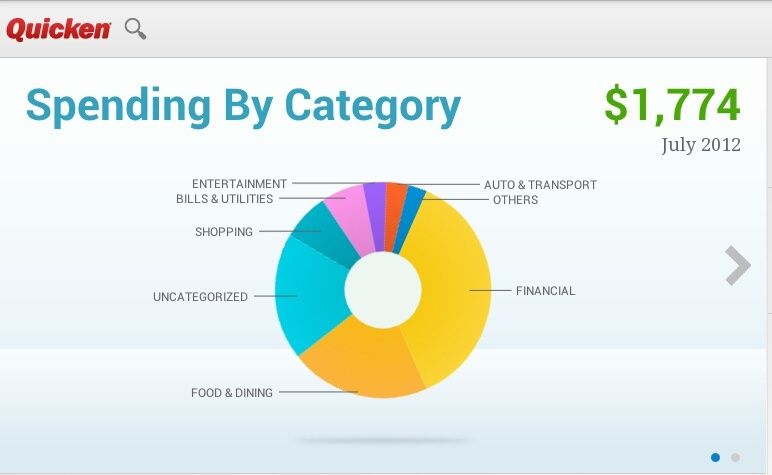
When Mint and Intuit announced the latter would be acquiring the former, the Quicken team and Aaron Patzer, the CEO of Mint, now a vice president of Intuit’s personal finance division, claimed that their two similar online product offerings, Mint and Quicken Online, would continue to co-exist. This made little sense to me.
In fact, I asked, “How long will it continue to make sense to maintain two highly similar services under one roof?”
We now know the answer is, “Not long at all.” The acquisition has passed regulatory requirements and is now official. With this news, Intuit has also announced that Quicken Online will cease to exist within six to nine months. This phase out will move Quicken Online users over to the Mint software.
It makes more business sense for Intuit to consolidate these similar product offerings, and I figured that in time either this would be the case or Mint’s software would be re-branded with the “Quicken Online” name.
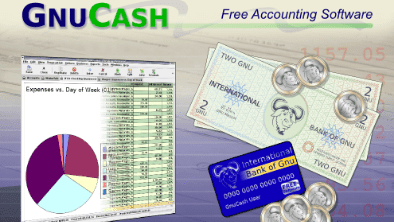
I am not a heavy user of either Mint or Quicken Online. I prefer the desktop software. With Patzer heading the development of the desktop software as well, I expect some improvements in a year or so with the next or subsequent yearly release.
1.8 million home buyers have qualified for the $8,000 first time home buyers’ tax credit so far or will qualify by the end of November. According to the National Association of Realtors (who have a vested interest in seeing the credit be extended and expanded) says 335,000 of those home buyers would not have purchased a new house if not for the credit.
With house prices still lower than their highs and not much activity in the market, the industry wants more stimulation. And the industry is getting more than the $8,000 stimulus. Formerly, the tax credit was available only to home buyers who hadn’t owned a house in the past three years. The new bill adds a $6,500 tax credit for current home owners who buy a new house, and who have lived in their current house for at least five years. The extensions comes at a cost of $10.8 billion over 10 years according to the Joint Committee on Taxation
In order to qualify for either credit, the purchase contracts need to be signed by April 30, 2010 and the closing must take place by June 30, 2010. The value of the purchased house must be less than $800,000. There is an income limitation as well, but it has been increased with the passing of this bill into law. If your adjusted gross income is above $125,000 (single filers) or $225,000 (joint filers), the maximum credit you are allowed to claim is phased out.
The extension of the home buyers’ credit was included within H.R. 3548 (Unemployment Compensation Extension Act of 2009), a bill which increases unemployment benefits for Americans for up to 20 weeks.
Do you think this extension is a good idea or with the economy beginning to improve, should we cease creating more stimuli?
Although it’s a little late this month, it’s now time to share my personal finances. I’ve been doing this roughly every month since Consumerism Commentary started in July 2003. I did recently make one important change — I am no longer counting my “business” bank accounts in my net worth. I’m trying to separate my business, which consists mainly of Consumerism Commentary, from my personal accounts.
October was an interesting month. I traveled to my brother’s wedding in California, so there were a number of extraordinary expenses related to the event. I do have some good news, however. The IRS has approved the reclassification of my side business from a sole proprietor LLC to an S-Corporation. this should result in a refund of over $8,000 from my 2008 tax payments.
It could take a while to receive the refund, so I’m not planning anything for it yet, but it will most likely stay in a savings account for a while.
The Security and Exchange Commission (SEC) is setting up a new division to oversee new financial products, and this group is starting with target date funds. These are mutual funds usually taking the form of baskets of other mutual funds, designed to target a certain year of retirement. As the year approaches, the fund automatically changes asset allocation, usually between stocks and bonds, to become less risky.
I’ve pointed out some of my concerns with target date funds here before. Mainly, they could be too conservative and it’s easy to hide fees. Mary Schapiro, the head of the SEC, pointed to the exchanges from stocks to bonds. The cost of the sales and purchases is buried in the daily price of the target date fund, and there is currently no good way for customers to understand how much they are being charged for the re-balancing of the portfolio they could do on their own.
Schapiro also noted that there is no standard across companies. A target date fund designed for those who plan to retire in 2050 with one fund manager may have a different allocation between stocks and bonds than a 2050 target date fund with another fund manager.
Here is a comparison of the asset allocations for the funds designed for those retiring in 2050 from Vanguard, Fidelity, and T. Rowe Price.
Vanguard
Fidelity
T. Rowe Price
Domestic Stocks
72.0%
69.5%
67.2%
Foreign Stocks
18.0%
20.0%
22.9%
Bonds
10.0%
10.4%
7.2%
Other
0.0%
0.1%
2.7%
The variation seems small but could have an significant effect on returns by retirement in 2050. If target retirement funds were standardized across companies, customers could accurately and easily compare returns between fund managers, understand the level of risk, and have the opportunity to make better investment decisions.
I am not convinced there is a need for this. Any fund’s composition is described in detail in the prospectus and in on a multitude of financial data websites like Yahoo Finance and Google Finance. What isn’t clear are the true fees. We do know that Vanguard’s fee for their 2050 fund is 0.19%, Fidelity’s is 0.82%, and T. Rowe Price’s is 0.79%, but that only tells part of the story. Whenever there is turnover — stocks are sold and other stocks, bonds, or other investments are purchases — fees are generated but wrapped tightly into the daily price of the fund so it is barely noticeable.
Asset re-allocation is the purpose of target date funds. Even if the underlying funds, those in the basket, are low-turnover index funds, the managers may be rearranging the index funds in the basket often. For those disciplined to handle the responsibility of occasional re-balancing themselves, and it’s not that difficult, I suggest avoiding target date funds.
Target date funds have lots of fans because it’s a form of automation, and automation in finances is usually a good thing. There is a danger of automation leading to complacency and a false sense of security. If you choose target date funds, familiarize yourself with the details and evaluate whether the pre-packaged re-allocation system is worth the thousands of dollars or more you could be losing in hidden fees and with a risk profile that doesn’t match your income needs and tolerance.
Would you like to see target date funds standardizes so a “2050 Fund” from one company matches a “2050 Fund” from another company? or should companies be left to determine what strategy is best for their customers?
This is a guest article by Scott Treadwell, a long-time Consumerism Commentary reader and graduate student at the University of New Hampshire. Scott is studying finance and is conducting a study in behavioral finance. Please look for the survey below and help Scott conduct his study.
We are only a year removed from the greatest financial crisis that has been seen since the Great Depression, and many voices have vowed reform throughout the industry and have assured us that these events would never happen again. The world of academia, however, needs to catch up to reality. As our engine of intellectual innovation, they should be on the cutting edge, but the same flawed precepts that have been taught to our business and finance students over the past twenty years continue to be taught (although the smart instructors will deliver the material with a caveat).
The standard methodology has been the Efficient Market hypothesis. Since news and information is so prevalent, academics assume the massive army of savvy investors that are active in the financial markets will instantly price the stock at the appropriate value. Given that assumption, most variables in the financial markets including human error are factored out and statistics are easily utilized to measure risk.
However, factoring out the human element was a mistake. Humans are the actors who analyze stocks and choose to buy, sell, or hold, thus determining the stock price. This is true whether the investor is an individual trading in her own account or a manager of a large mutual fund or trust. Based on recent events, it became clear that these three key assumptions surrounding efficient markets were incorrect:
Prices DO NOT reflect all available information. Not all information that is acted upon is available to the public. Frequent and chronic insider trading nullifies this effect. The problem is not just Wall Street; corporate executives and employees with a shareholder interest in their own company can, and do, cash out before unfavorable information becomes public, although few get caught.
Public information IS NOT always interpreted correctly. For example, many companies’ exposure to Mortgage Backed Securities was clearly stated in their financials, however that was determined to not be a problem until default rates skyrocketed. Some in the financial community warned that the level of risk was being underestimated for years, but inertia trumped their few voices and valuations remained unchanged, and wrong.
Human Beings are NOT rational actors. Many precepts of economics are based on the assumption that the average human will optimize his economic interest at any given time by making the optimal decision. If this were the case, impulse consumer buying, groupthink, and stock market booms and busts would never happen. This is like saying that when there is a fire in a crowded theater, people will calmly line up in the reverse order of their seating arrangement and orderly file out of the building because they know this behavior is in their best interest. The concept sounds ludicrous in that context, so why is it applied to financial markets? People panic due to fear, they over-extend themselves due to greed, and they make foolish decisions. In other words, they behave like humans, not robots.
Enter the field of behavioral economics and finance, one that has been on the fringes of academia for many years. Once viewed as a disparate group of contrarians who analyzed strange aberrations in the market, their work was discounted by mainstream. However, in light of recent events, academics and investors are paying new attention to this field and the body of research conducted over the past several decades.
So what is behavioral economics? Essentially, it is study of trading behavior that is not rational. The trading behavior of humans is analyzed to gain insight about financial markets and to account for deviation from normal behavior. Here are some examples of these unique trading patterns:
emotional or vested attachment to stocks
panic selling and impulse buying
recency effect (you are more quick to sell a stock you just bought rather than one you have owned for awhile)
disposition effect (people are more willing to sell stocks that increase in value and hold the stocks that decrease losers)
Now the next question is, why do you care? Accepting where we went wrong is the first step, however everyone from finance professors to Wall Street professionals need to understand how the forces in play that can shape the investment environment now and in the future. If non-rational human behavior is truly a large factor in the market, we need to be aware of it and consider it as we formulate our individual investment strategies.
In order to gain some more insight about individual behavior, I have a quick survey about your trading habits. It’s quick, easy, and totally anonymous. The goal is to gain as much input as possible. Five minutes of your time will yield great results which I will be happy to share with Consumerism Commentary readers once the data and reports are available.
Editor’s note: I completed the survey in under two minutes. Please take a moment to complete the short questionnaire and help Scott, a graduate student, complete his research study and earn his Master’s degree. ~ Flexo
While I was in California this past week, I spent a few days at my brother’s new apartment before his wedding this past Saturday. Among the piles of books not yet placed into a bookcase was something familiar: I Will Teach You to Be Rich by Ramit Sethi (review here). Ramit is a colleague of mine, a personal finance blogger who published a book that quickly became a favorite.
How Ramit saved my brother
My brother, who we’ll call Stewie for the sake of anonymity, is both a systems administrator and a musician; he earned good money from a day job which he then used to help fund his band’s national tour last year. But tours are expensive and money runs out. When I asked, he credits Consumerism Commentary and Ramit’s book with helping him get his finances in order and out of debt from the tour, and I think he mentioned Consumerism Commentary only to be nice. Stewie is an avid reader and has read a number of other books about basic money management and investing but I Will Teach You to Be Rich is the only one he feels provided concrete advice and suggestions for being smart about money.
I know Stewie was truthful because when he gave me a check to pay for the restaurant hosting his wedding ceremony and reception, the check was drawn from a Schwab Bank Investor Checking account, an account recommended several times throughout Ramit Sethi’s book.
The six-week “Boot Camp”
Today Ramit Sethi is releasing a new project. He has created a “Boot Camp,” a six-week program designed to empower participants to make better financial decisions. Through the Boot Camp, Ramit places participants with similar financial goals together and provides them with the tools, information, and most importantly, the motivation to get started and the group accountability to maintain action.
Here is how it works. At the start of each week, participants receive excerpts from I Will Teach You to Be Rich with additional content and worksheets. This is followed with a webcast, a video discussion on the week’s topic, downloadable so you can watch or listen on your iPod or computer when you have time. Each week will also feature special guest speakers including Andrew Jolls (ex-executive of FICO and founder of VideoCreditScore.com), Charlie Hoehn (author of Recession-Proof Graduate), and Chris Guillebeau (traveler and author of The Art of Non-Conformity). A complete curriculum including guest speakers is included below.
If Ramit had created the Boot Camp one year ago, I would have recommended the program to my brother. And this is coming from someone who was originally a skeptic of Ramit. When he first launched his blog in August 2004, I wondered how a pompous graduate student at Stanford could teach people to be rich without a long history of personal experience being rich. But his writing is captivating, he understands people, and provides the tools for getting things done.
How much does it cost?
At $199, the program might be a bit expensive for someone who is trying to figure out how they’re going to make their next rent payment. I’m confident this program will help a participant save at least $199, recovering the cost of the program, and the tools within will provide a lifetime of benefits. Ramit is offsetting the high price by offering a 30-day money-bank guarantee, so you can participate in most of the program and back out before the end if it is not working for you.
I’m generally a critic of seminars like Rich Dad Academy and Landmark Education, but with Ramit, I know the information will be sound, specific financial advice designed to inspire and motivate, not an up-sell scheme where you have to pay more for the “deluxe” package in order qualify for the useful information.
I expect the next time the Boot Camp is offered, the price will be significantly higher as he tweaks the service to include more materials and guest speakers.
Here is a taste of the Boot Camp, a twelve minute video of Ramit Sethi talking about automating your finances with specific tips for setting up accounts and directing your funds to the right places at the right times. (If you are reading through an RSS reader, you may need to click through to view the video.)
As of this past Saturday, my brother is now a married man. He and his wife live in California, and I spent Halloween attending their wedding and the past week visiting with my family in that state. I am happy I was able to take a week off from my day job and spend it with my relatives for the occasion. It was a beautiful ceremony and a fun reception and party, and within a few weeks, the new couple will be traveling to Costa Rica for their honeymoon.

The wedding was on Halloween, but costumes were not required.
I was happy to find a great deal on airfare for the cross-country travel. Delta Airlines offered a rate of $250 including tax for the round trip travel from John F. Kennedy International Airport to Los Angeles International Airport. This rate is about $100 less than the lowest rate I have ever paid for a trip for the Philadelphia or New York area to the Los Angeles area and several hundred dollars less than the typical rate.

In order to qualify for this low rate, I had to make a few sacrifices:
JFK is not my preferred airport. Either Newark Liberty International Airport (EWR) or Philadelphia International Airport (PHL) are more convenient.
When checking in for departure online, I was charged $15 for checking a bag in addition to my carry-on luggage.
After arriving at the airport, checking my luggage, and proceeding through security, I was directed towards a shuttle bus to take us to our gate at a different terminal.
On the flight, we are treated to amenities like a full-featured, personal media center but if we want a meal we would need to pay at least $8.

The seats on the flight offer less legroom than I am used to from other airlines like JetBlue and Continental. By the time I booked the flight, exit rows and bulkhead seats were unavailable.
LAX is not my preferred airport, either. A better choice for the Los Angeles area, where my brother lives, is Long Beach Airport (LGB). When visiting my mother, I would prefer John Wayne Airport (SNA) in Orange County.
Unable to check in online in advance for the return trip, I was charged $20 for having a bag checked. I also left a tip for curbside check-in.
Considering the price was half of what I might otherwise pay for a trip to California, I was willing to put up with a few annoyances. Although I like JetBlue, I feel no particular loyalty to any one company. I do not travel enough for frequent flier rewards to have any impact on my purchasing behavior.
Do you have a favorite or preferred airline or airport? Do you stick to your favorites or are you willing to compromise on comfort for a great airfare?
[00:00] Introduction from Flexo [00:32] Interview with Dan Solin, author of the “Smartest Book You’ll Ever Read” series
– [00:48] Rethinking investing
– [02:03] Index funds
– [02:50] Exchange traded funds
– [04:19] Using your 401(k)
– [05:37] The value of the dollar
– [08:20] 4% safe withdrawal rate
– [09:14] Dan’s incident with Jim Cramer
– [13:08] Dan’s Golden Rules for Retirement
– [14:35] Fee-only financial planners
– [15:37] Registered investment advisors
– [17:35] Immediate annuities
– [19:29] Setting aside two years of living expenses [21:35] End
We always welcome feedback from listeners. If you have any comments for this episode or for any other, or if you have suggestions for future episodes, please leave us comments here or email us at podcast at this domain name.