As featured in The Wall Street Journal, Money Magazine, and more!

From the category archives:

Consumer

If you were to start adding a comment to this blog post, but we first made you wait fifteen seconds after pressing the “comment” button to make you hear some extraneous instructions, you’d be terribly frustrated. Now imagine if every Web site had the same problem, and imagine further that you were being charged for every second of time you spend online.

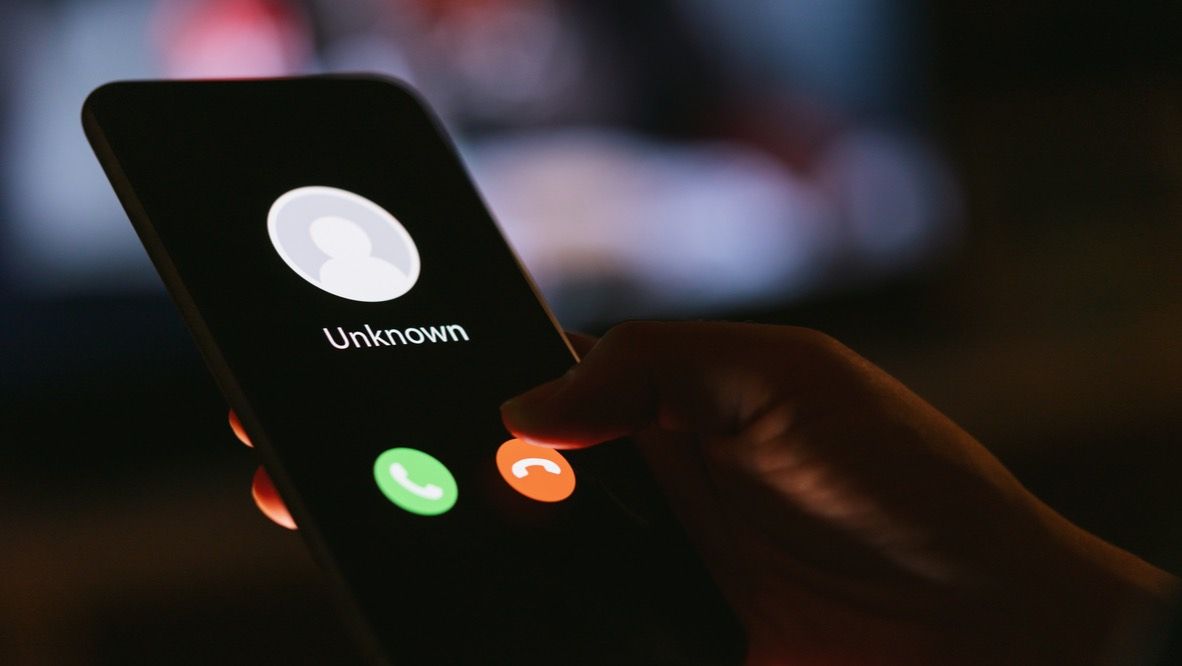
That’s basically the problem (well, one of the problems) with America’s big mobile phone companies. Anytime you want to leave a message for, say, a Verizon customer, you hear this:

At the tone, please record your message. When you have finished recording, you may hang up, or press 1 for more options. To leave a callback number, press 5.

We’ve heard these messages so much that we could all do bang-on impressions of them. For the most part, I usually just roll my eyes and my sense of the phone company’s collective intelligence goes down one more notch.

But David Pogue, technology columnist for the New York Times, sees a more serious problem: mobile phone carriers are using this extra-fifteen-seconds-per-call in a disgusting attempt to get more money from each of us. These seconds count towards our airtime usage. If you’re paying as you go, you see the problem right away. And even if you have a monthly plan, just four messages a month means a minute that you shouldn’t be using up.

But Mr. Pogue has an idea for fixing this (not to mention shocking data on how big the problem is). He’s started the “Take Back the Beep” campaign, wherein you and I send e-mails to the four biggest mobile phone companies, politely demanding that they quit this at-least annoying and at-worst money-grabbing activity. From the article:

cell executives admitted to me, point-blank, that the voicemail instructions exist primarily to make you use up airtime, thereby maximizing ARPU (Average Revenue per User)

If Verizon’s 70 million customers leave or check messages twice a weekday, Verizon rakes in about $620 million a year.

I’m heartened by stories that start out as a single complaint on Twitter, and end up getting a huge corporation’s attention, who is then obligated to rectify the matter. This should be even bigger than that. I took the time to send my complaint to AT&T. Won’t you?

Maybe if this is successful, we can then get mobile phone operators to admit that what we’re doing is just making phone calls, like we always used to do, and therefore, if you are the recipient of the call, you shouldn’t pay for it.

Take Back the Beep Campaign, David Pogue, The New York Times, July 30, 2009

{ 4 comments }


Editor’s Note: This program is back on again and should be available through Labor Day, 2009

All good things must come to an end, and in some cases, prematurely. The “Cash for Clunkers” Program, or more formally, the Car Allowance Rebate System, has allocated almost all of its budget to rebates after only four days. The law called for the program to last until November 1 or until the funds are depleted, which ever condition occurs sooner, but I do not think there were many people who expected the funds to run out this quickly.

Consider yourself lucky if you were able to qualify for the program before it was suspended.

Car dealerships apparently saw active business this past weekend, and if all the funds were used up then the program was somewhat successful. While on the surface, Cash for Clunkers appeared to be a program designed to help consumers or to help the environment, but the real goal was to help dealers sell cars. It resulted in some short-term success despite setbacks due to the EPA’s recalculation of mpg, but we will have to wait for the car companies to report their finances to judge the success.

It’s also a possibility that Cash for Clunkers will come back. If the Congress decides the program is worth spending more money, we could see another Cash for Clunkers. And if we do, it might even improved to apply to more cars.

Update: While the Transportation Department called dealerships to tell them to stop accepting applications for Cash for Clunkers, the White House informed the public overnight that the program would continue. The House and Senate are now racing to re-authorize the program for another $2 billion.

{ 6 comments }

The Cash for Clunkers Program went into effect recently, but so did changes to the official EPA-estimated mpg ratings of several cars. For example, the 1987 Mercury Grand Marquis, according to CNN Money, was rated a combined 18 mpg last week, but as the program began this week, the rating for this year, make and model jumped to 19 mpg on Monday.

While a change of 1 mpg seems relatively insignificant, the Grand Marquis rated at 19 mpg no longer qualifies as a trade-in worth up to $4,500 under the Cash for Clunkers Program. Since the new legislation was made retroactive to July 1, car dealers have been including the rebate in their deal calculations before the rebates were available. Furthermore, dealers offered the anticipated credit as an immediate benefit to the customer with the expectation of being able to file for the credit. But this change by the EPA resulted in some cars no longer qualifying for the credit already given to the customers and as a result, some dealers have been asking customers for the money back or threatening to take back the new car.

According to the EPA, 78 models became ineligible for the credit after the reassessment of mpg calculations while 86 other models have become eligible, so there may be credits available for some who may not be aware. The recalculations occurred for model years 1985-2007 to use the same calculation that began in 2008. This puts all cars released since 1985 on the same scale, and this was a change required by the new legislation.

My 2004 Honda Civic changed from an official EPA combined estimate of 34 mpg in the old calculation method to 30 mpg in the new calculation method. You can see how your car’s estimates changed at the car finder at FuelEconomy.gov.

{ 4 comments }

A week ago I wrote a post called “Is it Ever Okay to Steal Entertainment?”, which produced great comments from our readers, many of whom were clearly incensed that I would ever try to rationalize stealing from content creators. I’ve been thinking about the criticism and understanding that was added to the original article. I wanted to see if I could ever become the person that never even accidentally steals entertainment.

I got the impression from your comments, and correct me if I’m wrong, but a lot of people feel that if I’m enjoying any kind of entertainment, then I should have paid for it first.

The problem, I’ve concluded, is that we all steal. All of us. Not always on purpose, but it happens. Some examples:

The Problem with Having Friends

Your friends want you to enjoy the things they enjoy. I really enjoy the band “Cake”, and I never would’ve been exposed to them if someone hadn’t burned me a copy of “Fashion Nugget” back in 2001. Now, over eight years after that, I still haven’t paid for that album, but I enjoy at least one of those songs at least once a month. I’m willing to admit right here that I “stole” that album. And as a direct result, I paid for three other albums of theirs. So the band “Cake” was down one, then up three. “Cake” profits.

This is true of most of the bands that my friends share with me. Friends know best what you’re likely to enjoy.

The DVR Problem

I don’t think there’s any Cable/Satellite/FiOS TV provider that doesn’t offer a DVR box for their customers. Unless you’re watching a Superbowl-type event, or keeping tabs on a weather event or election, you’re probably skipping commercials. That’s stealing: it breaks the model of “we’ll make shows, you pay us, and we’ll insert ads for your product, and there’s an infinitesimal chance our viewers will buy your product over someone else’s”.

If you have a DVR, and you’re decidedly not skipping commercials out of a noble effort to continue this outdated model, then my hat’s off to you, and also, I don’t believe it.

Not to mention the fact that most of the time, the volume of commercials during the break is set so loud that I feel I’m being screamed at.

The “Album Only” Problem

The list of albums that I can listen to all the way through is about half a page long, double-spaced. Nearly every album contains filler material: stuff that the artists know most people won’t like. For about thirty years, record companies sold single songs, with B-sides, and they did very well. The popularity of the CD somehow brought about a trend for people to buy whole albums.

I bought plenty of albums on CD, and have been disappointed with plenty of songs. That’s not an accident, that’s the record company stealing from me. I’m not saying “two wrongs make a right”. I’m just pointing it out. Apple and the record companies know that people much prefer buying single songs, and not wasting money, so they’re working on a new add-on for people who buy whole albums. We’ll see how that turns out, but at present, I predict it will be a miserable failure.

Entertainment in the 21st Century

I much prefer the Creative Commons approach to releasing entertainment. Since Day One, Jonathan Coulton has made it possible and easy to enjoy his music for free. Just as importantly, he’s made it possible and easy to pay him for the songs you like. His music makes me so happy that I’ve paid for the MP3s, as well as a collector’s set of “Thing a Week” CDs, a DVD, and tickets for three concerts.

I know the system works for him, too, since he recently moved into a bigger house with his wife and children.

A Larger View

I think we’re in between payment models at the moment. I’m seeing a 21st century where people only pay for the things they enjoy. My wife and I are already working on a computer-based system, using content from places like Hulu (which includes ads that you can’t skip, but only a couple minutes’ worth), and I’m looking forward to reporting on it, if I can get the bugs all worked out.

{ 18 comments }

As a part-time producer of creative works that I think are worth something (though I’m not currently requiring payment for anything), I struggle with the urge to acquire my entertainment media as conveniently, quickly and cheaply as possible. My viewpoints on this have changed over time, especially as my disposable income grew, and I’d like to share with you my current ideas / rationalizations on when it’s okay to steal.

Music you’ve already paid for

Depending on when you were born, you may have bought some of your favorite albums in upwards of five formats: vinyl, 8-track, cassettee, CD, and MP3 (if you lost the CD, or it got too scratchy). I’ve never actually held an 8-track tape, but I’ve owned albums in all the other formats, and I’ve decided I’m not re-buying anything.

When I bought my first CD in 1989, (Faith No More’s “The Real Thing”, which still rocks really hard), the people who produced it had no intention of tracking its sale for more than a couple of years, not to mention that conventional wisdom at the time considered the new Compact Disc format to be practically immortal.

Practical concerns aside, I paid for it once, and music isn’t meant to expire. So, even though the CD itself got lost somewhere along the last twenty years, when I decide I want it back in my music library, I won’t be paying for it. It was already paid for. I’ll just acquire it somewhere.

Shows your location won’t allow you to watch

My wife and I deeply enjoy a few shows that are produced and released by the BBC. We have BBC America, but even the shows that make it over to this country are delayed, usually six months or more, and they’re often edited, censored and shown in standard definition (as opposed to HD).

So I download those shows as soon as they’re available online. This is not the same as downloading, say, “True Blood” without being a subscriber to HBO. I feel a little more justified in yanking “Doctor Who” down to my hard drive because BBC content is produced without regard for sponsors or subscription fees, as we understand them.

Movies and TV from used/rental stores

I’m a little more iffy on this one; sometimes it depends on the quality of the movie, but after a DVD is bought once, the studio got paid as much as they were ever going to. If the DVD then ends up in a used/rental store, I don’t have a moral problem with copying the DVD to my hard drive, and then taking the DVD back to the store.

There’s also the case that I saw the movie when it was new in the theater, and I’ve rented it at least once. In that case, I can’t bring myself to pay for it again, and I’ll just make a digital copy.

Frankly, if it were easier, and a little bit cheaper, to legitimately buy and download (and keep, forever, free of DRM… otherwise it’s leasing, not buying) a movie. I’d probably do that instead of “stealing” it.

The flipside

On the other hand, when a show originates online (e.g. Homestar Runner, Dr. Horrible’s Sing-a-long Blog, Ask a Ninja), I’m more than happy to support the creators by buying DVDs and merchandise. Why? Because they don’t bother me with commercials. They can’t keep making the show without me, and that’s a business model I can get behind.

Your ideas

Do you have similar rules for yourself? I’d love to hear them in the comments.

{ 30 comments }

Summertime is traditionally when most people take their annual vacations, and since the social media explosion, more aspects of a given person’s vacation will end up as photos on Flickr, or “wish you were here” messages on Facebook.

I’m a big fan of openness (with the obvious exception of my use of a pseudonym on this site), and so I’m a little sad, though not surprised, to see at least one victim of a burglary who suspects his tweeting about being on vacation is the cause of his trouble.

The Trouble

“We had mentioned that we were going out of town for an extended period and even Twittered about the trip as we drove for three days,” he told an Arizona television station. While he was gone, video editing equipment was stolen from his home.

The Subtleties

My first reaction was to assume that the man in the story has some people following him on Twitter who aren’t exactly friendly. But then I remembered that anybody can do a search on Twitter for a phrase like “vacation” and find results like these:

Master Chase on vacation

Then, if you can cross-reference a likely victim with their address found online, and you have criminal tendencies, then you know which house to burglarize.

Additionally, many Twitter apps (and possibly for other services) have the option of finding your current location and looking nearby for specific criteria.

The Solution(s)

Take an inventory of which of your information can be found online easily. Some starting points:

  • Is your username the same as your real name?
  • Are you and your address listed in the phone book?
  • Does your wireless router know where it’s located? Does it broadcast that location?
  • Is your profile public? Do you want to keep it that way?
  • Are you on LinkedIn? How much of that profile is public?
  • and so on…

You may decide that a simple solution would be to keep the vacation secret until you get home, but remember, even if you decide to avoid the magic word “vacation” in your own online updates, your friends may inadvertently be helping potential burglars:

other vacation

Going on a trip? Keep tweets discreet, Kathleen Pender, San Francisco Chronicle, July 6, 2009

{ 3 comments }

Businesses are hoping to get more bargaining power when it comes to how much they are charged to accept credit and debit card purchases.

The Credit Card Fair Fee Act (read the whole bill), was reintroduced this year and is now being discussed in Congressional committees. I first heard about it when I was buying an emergency breakfast at one of the various 7-Elevens that are sprinkled on my way to work.

They had a binder of papers on the counter and were asking for people to sign their petition. It seems that groups like the National Restaurant Association feel the credit card companies are treating them unfairly with a lack of transparency in the way they do business and arbitrarily raising fees.

Convenience store owner Bruce Mitchell said his operation paid out more than $3 million in credit card fees last year.

“I am paying 25 percent more for credit card fees than I pay in wages,” he said.

Business owners say that these fees, and their frequent increases, are being passed along to consumers in the form of higher prices.

What do you think? Should the “free market” sort it out, or do credit card companies have too much power?

Small business pushes credit card reform, Susan R. Miller, South Florida Business Journal, June 8 2009

{ 2 comments }

On July 20, TIAA-Cref will be holding its annual participant meeting. There is an effort underway to encourage the company to be more socially responsible and accountable to its customers, and representatives will be attending the meeting to bring any common problems directly to the board’s attention.

Are you having customer service problems with TIAA-Cref? Please see the instructions below. Here are my past notable experiences with the company.

In March 2006, I scheduled a transfer from ING Direct to create my first SEP IRA on April 7, leaving enough time for the account to be created before the tax deadline. I noticed the problem the day after the account should have been created. The company did not create the account nor did they deduct funds from my ING account. There was still a week before the tax deadline, so I was not yet up in arms.

By April 18, 2006, the TIAA-Cref account had been created but they still did not deduct my funds. This was after the tax deadline, so I was very concerned that the funds would not be attributed to my 2005 SEP IRA. I had difficulties getting the correct department on the phone.

My 2005 SEP IRA was not funded until April 28, 2006, and my level of concern was much higher. I spoke to an account representative who assured me that even though they were late, my money would be applied to 2005’s tax year and I would get April 7’s price for the investment. My account information online confirmed this.

Fast forward to January 2007. I received my received my tax forms from TIAA-Cref which indicated my SEP applied to the 2006 tax year. I did eventually have this issue resolved, but it surfaced only one week after I reported that thousands of people were having problems with TIAA-Cref. Customers could not access their money, didn’t receive their payments, and couldn’t get in touch with any customer service representative who could fix the problems.

The company acknowledged the problems and attributed the mishaps to implementation of a new computer system. This excuse carried on as the problems did for at least a year, with updated in March and June 2007. Even today, visitors are still voicing their concerns with TIAA-Cref in these comments this year.

Most people’s problems were a lot more frustrating than mine, involving restricted access to money and missing payments from the company. Although I think it may be too late, Neil Wollman, an author who has been following TIAA-Cref’s activities as a socially responsible company over the past twenty-five years, is looking to speak up for consumers at the company’s annual meeting later this month.

If you are currently having issues with TIAA-Cref that you have not been able to resolve by going through the normal channels, please let me know by commenting here using an email address where you can be reached or email me directly at flexo at this domain name. I will pass your information along to Mr. Wollman who will speak to the board of directors on your behalf.

{ 3 comments }