
Sold My ESPP Shares, Nice Profit, More Tax Owed

At the beginning of the year, I started participating in my company’s newly-offered employee stock purchase plan, which gives us the opportunity to automatically deduct up to 10% of our paychecks and defer that money for use at the end of the quarter. At that time, we are able to purchase stock at a 15% discount off the lower of either the price at the beginning or the price at the end of the quarter.
The quarter ended over a month ago, but I was restricted from selling stock until a few days ago. The transaction settled today, and I got a decent price on the stock, but definitely not the highest of the day I executed the trade.
Banking Deal: Earn 1.55% APY on an FDIC-insured money market account at CIT Bank. See details here. CIT Bank. Member FDIC.Nevertheless, with the discount, I was able to buy the shares at around $70 and the selling price was over $100. Even though E-Trade charges a $19.95 commission for selling these shares, and the SEC felt the need to charge me an additional $0.03, I feel it is a worthwhile short term investment.
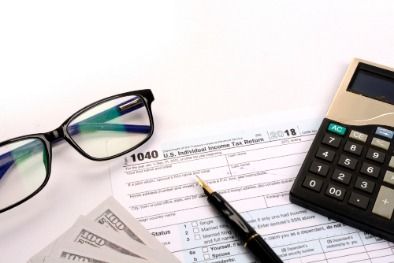
As far as the tax implications go, E-Trade has a detailed ESPP tax guide that explains things more succinctly than I’ve seen anywhere else. Since I haven’t been enrolled in the ESPP program for two years before selling and I haven’t held onto the stock for a year, I’ll have to pay a portion of my gain as ordinary income (the difference in the discounted stock price and the market price at the time of purchase) and short-term capital gains (the difference between the market price at the time of purchase and the price I paid to sell).
Thankfully, the guide I linked to has a step by step procedure for using the information reported on W2s and 1099s to report the taxes correctly to the IRS.
I have a few reasons for not holding ESPP shares longer to take advantage of long-term capital gains rates. First of all, I’m already invested in my company’s stock through my 401(k), and while I believe the 20-year prospects for my company are very good, I don’t want to overload on one specific company. My salary is also tied into my company’s performance, so I’d like to limit all-around risk.
I also don’t believe the 15% tax rate for long-term gains will be around forever, but that’s just a hunch.
Article comments
@ Coder
While your numbers are correct they aren’t “real”. ETrade’s commission to sell shares is $25. So technically, you’d be losing money in your example. Sorry to hem and haw, but a 17.6% return is much different than a $10 loss.
Yes, but the $25 is the fee regardless of the number of shares… so if this hypothetical investor received 200 shares of this $100-priced stock, the $25 fee to sell wouldn’t result in a loss. Coder didn’t say how many shares, just that the price of a share was $100. That’s the way I interpreted the comment, anyway, and granted, it wasn’t clear.
@KMC: It's actually a 17.6% return before taxes and fees instantly.
Example: You receive $100 of stock for $85.00. If you were able to sell immediately you'd make $15.00 which is a 17.65% realized return.
This might seem pedantic, but investors hem and haw over every percent.
You have to calculate the XIRR to get the correct rate of return. 17.6% is cash on cash, but using the time value of money it’s much higher on an annualized basis. Think about it, if it purchased 14 days after your last payroll deduction, you made 17.6% on that one deduction in TWO WEEKS. That’s effectively 280.9% on an annual basis. Of course, that’s averaged over the period (say 6 mos), so that very first payroll deduction earned ~11% in only 6 months. Still, not too shabby.
If you plan allows taking the lower of the cost from start to finish, and has a 15% discount, go for it! My measly plan makes the purchase on the last day at that day’s value and is only a 5% discount. Not worth the effort.
I think ESPPs are great. You got a 15% return (before taxes and fees) for doing nothing really. If we had one, I’d participate for sure. My wife’s old company had one and I loved it. We always did what you did – sold the day we could.
I used be in a plan with the same parameters. Unforutnately it was in 1999 when I bought and I had to wait until 2003 before I could sell at break even. I think you were smart to take the profits that were there.
My company offers a lousy 5% discount on our stock. As the stock is quite volatile, this basically makes it a worthless benefit. But 15% isn’t bad.