
Cash vs. Credit Card: Gas Stations Charging Different Prices

I noticed something disturbing last night. I pulled into my favorite low-cost gas station, which happens to be Valero. It’s my favorite simply because it’s the least expensive in the area and it’s right on my route home from work. Apparently they have begun charging 6 to 8 cents more per gallon for payments with credit cards than they are charging for payments with cash. This is a very new development, as the last time I filled up a few days ago, this was definitely not the case.
If you’re looking for a gas rewards credit card that can help you save money at the pump, review this breakdown of the best gas rewards credit cards.
I didn’t look at the pump until I gave the attendant my credit card and he began pumping. (New Jersey is still a full-service-only state.) There was nothing on the large sign that indicated that there was now a price difference between credit and cash.
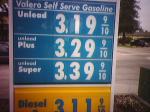 The price difference practically wipes out the cash back bonus I’d receive by using my credit card with rewards, so it will now be more difficult to determine which method of payment will actually cost less in the long run and which gas station to use, as prices vary daily.
I thought it was against the terms of service of a merchant account — and possibly against the law — to charge different prices for cash and credit or to add a surcharge for credit card purchases, all else being equal. Here’s how the stations apparently get around this issue:
Now we all face dual pricing, and as was the case when the practice first popped up, to comply with the law, the pump price has to be the credit price from which the cash discount comes.
But the price advertised on the big signs that draw people to the stations is the cash price. That is misleading. According to North Jersey Media Group, gas stations are “forced” to adopt this policy because merchant fees eat into their profits. I understand that individual stations are put in a squeeze when prices are increasing. Understandably they want to pass that cost onto the consumer without pricing themselves out of competition.
As I’ve been following prices practically day to day, it’s clear that when this was initiated at the stations within the last few days, the cash price is the one that followed the trending line and an extra surcharge was added to the credit card prices. Nevertheless, they can still consider it a “discount” for cash purchases. The regular credit card price should be the one advertised on the large signs, not the discounted price.
Article comments
To add to this, has anyone noticed that some gas stations, when you pull the handle to pump the gas the pump starts ringing cost for the air in the lines before the actual gas begins to flow? And at the end when it slows down to stop pumping? It can be anywhere from .40cents to over a dollar. This may not matter to some. But its another way they rob consummers.
The card transaction fees might be increasing, but chargebacks are at least as much of a problem. They will always become the store’s problem no matter how much they pay in card fees.
I see many of you thinking gas stations are screwing you by making you pay extra to use credit cards. I personally own a few gas stations and we only average 7 cents a gallon in profit with cash payment and if we were to have to pay credit cards fee out of that we would only average 1 to 2 cents a gallon and a average store does 60,000 gallons. Now do you think we will invest $500,000( cost of tanks, lines, pumps, pos, and canopy) to only make a 600-700 dollars a month?
The point is deceptive advertising. And I filled up today and the cash “discount” was 20 cents or 10% of the advertised price. What credit card fee out there is 10%? Stations are advertising a deceptively low cash price knowing that the majority of customers pay with credit.
I don’t understand why I paid $4.79 for galón in gas station 76 located in Los Angeles , ca . Regular . I had luck ,? because only half tank
This is a thing that consumers can actively fight simply by not purchasing from gas stations. The fee for credit purchases is only 3% of purchase which the gas station adds to the price of fuel. The consumer is paying the entire cost of the fees charged to use a credit card, this is just another legalized way for companies to profit from consumers for fake charges the gas stations claim to have. It is a lie. A $40 purchase costs the consumers $1.20, the new “surcharge” costs consumers $4 for the same purchase.
That’s a lie. Gas stations can be charged up to 7% of the total price by credit cards. Those are very REAL charges. Clearly you dont know what you are talking about, Steve.
If a gas station or any business accepting card-present charges is paying 7% of the transaction to their processor they’re being ripped off and have done a poor job shopping their processing.
I made a purchase on debit card for gas 34 dollars
The station withdrew 85 but returned balance
Still this scared me and had no idea what or why, apparently many do this but I never realized and didn’t see a notice or publication.
Can’t but wonder if this is ethical or legal
That is because at the time you swipe your card the pump does not know how much gas you are going to purchase, so YOUR BANK puts a hold of an amount on the card. It isn’t charged to your account, it is simply holding the amount. After you finish fueling YOUR BANK charges you for the amount of purchase and then takes the remainder off hold. It is done so you can not pump more than you have available in your account.
If this is a problem for you simply pay for the fuel inside.
Shell/Circle K now charge the higher price when paying with CASH. They give a discount only when using their “Easy Pay” card linked directly to your checking account. They are actively phasing out cash.
That’s where I went for gas
With held 85 for 34 charge
The discount for cash at gasoline retail stores was introduced in Michigan, many years ago. It was short in existence as it was ruled to be a charge for using credit and in fact, against the law. So much for the grand scheme that was ill conceived.
Funny. Did not it occur to you that the only establishments charging consumers for using credit cards are the gas stations? I can’t imagine Walmart or Macy’s teller charging you more at the cash register when you pay with a credit card. Or any other store! It is only gas stations… And one more thing abouy advertised gas prices – they show the prices in fractions of a penny! When you see the price like $2.29 it really means $2.30 because it is 29.299. It is only the gas stations that are allowed these little tricks invented to deceive consumers.
That is because at the time you swipe your card the pump does not know how much gas you are going to purchase, so YOUR BANK puts a hold of an amount on the card. It isn’t charged to your account, it is simply holding the amount. After you finish fueling YOUR BANK charges you for the amount of purchase and then takes the remainder off hold. It is done so you can not pump more than you have available in your account.
If this is a problem for you simply pay for the fuel inside.
welcome to the “modern” world and yet in stores if price is tagged less than what’s at the till the lest is honored
I thought the price on the advertisement beside the road was the price at the pump. Is it not illegal to show the cash price on that sign and not say cash price on the sign, most stations do but a few don’t, isn’t that illegal.
I only see this at foreign owned stations along with the discount for car wash scam. Like many on this thread, I only go where I am not charged extra.
Not new. I’ve been working at this gas station for coming up with 4 years.
Hi everyone, I’m putting some feelers out there to see if there’s anyone interested in making a pretty substantial amount of cash in a short amount of time. Only thing this requires is that you have an active bank account or credit card . No cash is required up front to start. Which means your account can be on a zero balance and that’s completely fine. There are different money deals that suit just what you want, contact 44royaltom@gmail.com
As a customer who uses credit for convenience (NOT POINTS) I also only patronize the stations who do not charge more for credit. I don’t want to inconvenience the owners of “small” stations that can’t afford to take my credit card., No offense, but your cash customers can support your business. I will get my gas- with credit- at stations that don’t charge more. It’s simple..,. I understand some smaller business can not afford to give credit customers the best price. I am fortunate to have choices here. Companies like Speedway (new in the NY market) forbid their stations to charge fees and they have unbeatable prices. It’s a no-brainer to patronize these stations.
The station is usually go to just started “charging” extra to take my credit card (by any other name, it’s still costs more). Fortunately, I have a choice and will purchase my gas elsewhere.
Yes. Discount for cash IS legal. Fee for using credit is NOT (per contract with credit card companies and govt. However they advertise the cash price as the regular price. The govt needs to get off it’s ass and do the job they take tax money to supposedly do. There are stations on long island charging $1more for credit cards per gallon. I reiterate u do NOT have to accept credit. If u do u should not penalize the consumer. I advoid stations that are deceptive. I advise others to do so as well. Consumer beware.
ladi
I just left the Clark station at 2200 N Prospect in Milwaukee. They were charging $2.85 for Regular and $3.25 for midgrade, that’s .40 more, and $3.50 for premium. Outrageous!
I agree with the business people on most of what they are saying. However, here is my whole thing: Don’t LIE to me and then tell me to have a nice day and expect my repeat business.
IE if your damn sign says 3.50, the pump better say 3.50 too, or I just drive off and find one that does. First time I did this was at a Mobil station in Niceville Florida. I live outside the US considerably, and this was the first time I saw this blatant thievery. Many people don’t check the pump after seeing the price on a 20 foot billboard, normally I didn’t, you can bet I do now. It’s using that part of human nature that believes big corporations won’t cheat you, that the price on the big damn sign is the real price, and that the government would stop them if they tried to cheat you.
If you don’t like it, quit buying it. I won’t ever stop at a Mobil again unless I have no other option.
I live in Central Florida, and due to my job requiring me to drive all over the place, I’ve recently seen the cash/credit signs popping up. I live in a very rural area, we have five gas stations, a liquor store, a pizza joint and a Publix plaza within about a 14 mile radius. Two of the gas stations were mom and pop stores, one had pumps and one didn’t. I never went to the one with pumps because usually the gas prices were outrageous and I was tod by neighbors not to trust the gas or the owners. Also they had a 5 dollar minimum for debit/credit cards. I have a debit card, never had a credit card. So I went to the one across the street that offered no gas. They had no minimum for cards, I’d go there and buy food, snacks, beer, cigarettes, me and my family spent a lot of money there, and became quick regulars because they had decently priced goods, and they’re ony a mile away, compared to the 711 5 miles up the road.
Anyways, that station with the gas eventually closed, no one ever went there, all while the other store was bumping, without gas, they were constantly busy from open to close! Then the owners of the no gas pump store decided to sell the store, because they were moving to another county to open up a liquor store. The new owners moved in, and boy did they screw up. They took away the hot food, and boiled peanuts, they raised the prices on EVERYTHING, and then sapped a minimum of 5 dollars for using a debit card. I went there once time for a pack of cigarettes once the new people moved in and I paid 3 dollars more than I was normally paid at that store I shopped at for years. I was extremely disappointed, it made me feel good to support that business for the many years that I did. Anyways.. about ess than a year after that place was bought, it was closed down due to not making any money because everyone was going elsewhere.
Then we had a BP get built, and at first they tried that 5 dollar minimum thing, and the people of my area just weren’t having it and the store was starting to go down the hill, the owner was replaced, and the new one took away the limit. They learned real fast that wasn’t going to work here.
I personally go to 711 because everything is cheaper there and I have yet to run into one that discriminates against card holders.
Also, today is December 15th 2014, just cause there is no timestamp. That’s kinda annoying.
And my l button isnt working properly. *slapped, *less and sorry for whatever other typos I made.
It is legal to sell you gas at cash price but charge you the difference on your credit card ?? The other day I was getting gas and the attendant told me that the credit bottom on the pump don’t work so he press the cash price bottom and charge me 10 cent per gallon on my credit card …..
Pretty funny reading about how little stations make on gasoline. Absurd to listen to the bs The funniest was reading how a drink profit was only a quarter. and the guy who paid 50,000$ a year in swipe fees……only thing matters is the bottom line and you never see these stores go out of business
Thanks to cash paying customers. Do you have a problem paying cash? And why is that? Why do you want a store owner to pay for your rewards?
I find it funny when I see dollar signs in your eye balls and saliva dripping from your lips, and in your head you are thinking “FREE! I LOVE FREE STUFF!”
LOL
Folks, this is pretty simple. If we eliminate the emotional responses that many consumers seem to be exhibiting, based on unclear signage or a lack of being informed, we get to some simple realities:
1. Except in situations where basic services are being sold that are necessary for people to survive, the government should not be involved in telling businesses how they can price their goods. The only reason the government is involved in this situation, is the mega-rich banking corporations lobbied Congress to get rules in place to favor their business model. (i.e. They don’t want consumers to see or think about the costs that are involved when purchases are made by credit card.)
2. The assertion that merchants are “charging people more” when customers pay by credit card is absurd. They are charging you what it costs for the product or service, when you pay by credit card. In exchange, the business receives potential benefits (possibly more sales due to more payment options being available to customers) AND the customer also receives potential benefits (buyer protection, reward points, use of the credit extension, etc.)
It’s up to the MERCHANT and the CUSTOMER to determine how valuable these potential benefits are. They are not FREE. Everything comes with a cost.
3. I don’t understand why people think businesses who choose to accept c-cards should be FORCED into making non c-card customers subsidize the c-card customers. Can they do it? Sure. Do many merchants do it? Sure. But they should not be FORCED to do it.
If you’re confused by this assertion, once again understand that nothing is free. When customers pay by c-card, the merchant DOES have to pay more for those sales (BTW: Huge mega-corporations usually pay a much lower rate, while smaller businesses pay a higher rate. So, chock up another disadvantage that the small business owner faces!) A merchant who charges the same price for cash or c-card purchases simply adds this cost to ALL OF THE PRODUCTS. In other words, people who pay by cash are in fact, paying more for the same product so that c-card customers can pay the same price. If the business wants to do that, fine.
But…
If the business wants their customers to pay a price that more accurately reflects the transaction at hand, then they should have the right to incorporate the additional cost of c-cards into their pricing. (And no, I don’t care if it’s called a cash discount or not, it’s the same damn thing.)
And here’s the best part…
We, as a society, can actually allow businesses to do this without hurting anyone. If you don’t like shopping at businesses who offer different pricing for cash or credit, then DON’T SHOP THERE.
But let’s not tell businesses that they cannot price their products and services in a manner that actually reflects the costs.
If I own a business that offers delivery. I can do this two ways:
A. I can charge everyone the same, and offer “free” delivery.
The reality is everyone is paying for the “free” delivery, whether they use it or not. The cost of the delivery will be (secretly) added to everyone’s purchases. So everyone will pay a little more for the product, even if they do not utilize the “free” delivery.
B. I can offer a delivery service to my customers for an additional charge
In this scenario, you only pay for the service you use. The prices of my products should now be lower, as they no longer reflect the built-in, added expense of “free” delivery
As you can see A and B are both perfectly reasonable options. As you can see, customers are paying for the service either way.
I think in a country where we parade our “freedom” around like a trophy, businesses should have the freedom to price their products how they see fit, and consumers should have the freedom to shop at businesses that they see fit.
I’ve read through all of the comments and I find it troubling that an important fact is being withheld ( on purpose or not, I do not know ). I do own a business, so I’m all familiar with cc processing fees but I also know that without cc, I would not have the critical amount of business to sustain operations. This is fact that nobody is mentioning.
So you have to pay the cc processing fees and it’s eating into your profit PER TRANSACTION.
But now many more of those transactions do you have because of the convenience of being able to use cc?
So, let’s look at this scenario, you make 6% profit when getting cash per transaction but only make 1.5% or 2% when the transaction is made with a cc. But your total inflow for the day is maybe 30% cash and 70% cc. Now let’s count which one gives you more profit at the end of the day. Gas business is volume business, so don’t pretend that it’s not.
The price should be same for cash or credit and if you want to give discount for cash customers, it’s up to you but advertise regular for your business ( based on percentage of sales ) price for everyone to see and then you can show the discounted price at the pump.
Every self respecting business knows how to price their product to account for all business expenses, so let’s not cry about high fees but set a realistic price and let the market decide if they want your business.
Gasoline business is different. Gross margins are 8 cents / gallon. So 0.08/3.339 = 2.4% approximately. The credit card fees are on per gallon sales price: 3.339 x 2.6% fees = $0.087.
So, your gross margin is 8 cents – 8.7 cents cc fees = 0.7 cents loss. What about rent, employees, utilities, supplies, etc.?
For everyone who is whining about the legality of charging more, it’s a free economy (currently). The fuel station has the freedom to charge whatever they wish – just like I have the freedom to not buy that business’s product. I am well aware that fuel stations do not make profit on the sale of fuel (if anything, they lose $$). The fuel is a sort of advertisement to get customers to buy sodas and snacks inside.
When we factor in rewards from credit cards, the mark up ends up being only a couple of cents for each gallon. Even if I had to put 50 gallons in my vehicle to fill it up, that’d only be a dollar or so. At that point, the consumer must ask whether the $0.25 is worth the convenience of not having to walk to the cashier to fill their 20 gallon tank.
Fuel quality is another big factor here. Top Tier is a certification standard that qualifies good fuel. Bad gas leads to bad engines. Bad engines get bad fuel economy. Bad fuel economy means more gallons pumped at the fuel station.
The lack of education is shocking to me when it comes to issues like this. For example, I was at my favorite QT a few days ago and noticed a woman fueling her new Acura MDX with regular (87 octane) fuel. After confirming my suspicions later (Google search), I noted that vehicle REQUIRES premium (91+ octane) fuel. If you put in low octane, the fuel will explode too soon in the combustion cycle leading to a pinging sound. That pinging sound is the pistons being torn apart. Literally. Give that car a few thousand miles and it will need a new engine. Which is more expensive, premium fuel (for your $45k SUV) or a new engine? It’s this kind of ignorance that needs stamping out, not undesirable corporate decisions.
I hear all your justifications for why gas stations charge more for credit, but they are not really in a different position than other retailers that accept credit cards. Credit card fees are a cost of doing business, that all other retailers absorb. Gas stations are not the only low margin business out there. If we, as consumers, stood up and declared that we refuse to pay more for credit and start giving our business to stations that charge the same for credit and cash, things would change. The current situation exists because we allow it to and don’t use our power as consumers to effect a change!!
I am not aware of any other business where the profit margin is 3%!!!!!!!!!!!!!!!!!!!!!!!!!!!!!!!!!!
Right now the avg. cost for gas is $3.50 the avg. cost is $3.40 after sales taxes
People have been telling me we are going to drive( no pun intended) our customers away because of the cash/credit pricing for 7 years now. We do charge more for credit($.14) which covers the credit card fees and this enable us to offer our ‘Cash customers a lower(discounted) price. The cash/credit pricing has actually increased our business because we can now offer our intelligent customers who pay cash a cash discount for the gas. These people are smart enough to have cash available to buy the gas. Most of our credit customers just don’t care because they don’t have to take the money out of their pocket, just swipe the card. People think that it is so wonderful to get points, cash back, etc. for using their credits cards, but they don’t realize that the merchants are the ones that foot that bill. We pay the fees. Well smarten up America there is nothing free in this world. Somewhere down the road, you will pay for those points!!!! At least at my station you will……….
Keep the discussion civil and informative. No calling names. I’ll be watching this thread and preventing abusive comments from being published.
Anthony and Howie… just a post script to my earlier comments. I already drive 10 miles out of my way to avoid doing business with a merchant who charges a .35 transaction fee on debit cards (which is a violation of their merchant agreement). Despite being taken to task by VISA for their violation, they continue to impose the fee, couching it as a “discount” (but, when you get to the checkout, the “discount” is added on if you use the debit card and not “deducted” if you pay cash — so it’s not a discount, it’s a transaction fee). So, despite having this being brought to their attention, more than a few times, they insist on gouging the customer, figuring that since I live in a rural area, people would rather pay the fee, than drive the extra distance. Wrong. I will simply make less trips, plan more and go OUT OF MY WAY to not do business with them and I encourage anyone I speak to about it to do the same.
I have nothing against the employees of the establishment, but sooner or later, they’ll get the point or they’ll go out of business trying to make theirs.
While I agree there are deductions off taxes owed, i never ever get back the $144,000 a year that it cost me in Credit Card Fees.
These deductions are 100% deductible, not subject to an off-set or as a percentage. Business deductions directly impact the reported income, as opposed to coming off the taxes owed on the back side of the return, so, that means that the only way you would not receive the full 144,000 per year in credit card fees is if you did not make that amount in gross profit. If that’s true and you’ve been in business for 5 years now, I wonder at your being able to remain in business at all, since you do not seem to be able to earn sufficient amounts to make any profit.
I rather question your whole 144,000 per year in credit card interchange and transaction fees, because even if your fees were double the national norm, let’s say 8%, would mean you would be bringing in, in terms of gross receipts 1.8 million dollars, from which you are able to deduct normal business expenses, cost of products, employee wages, insurance, etc. Now, if your deductions /exceed/ the total gross receipts, then you would not receive the benefit of all the allowable deductions because the cap is your total receipts. Given the fact that you own and operate a gas station, I’m guessing you’ve got some expenses that far exceed in terms of percentage of your gross receipts the interchange and card transaction fees. Given you sell something highly flammable, I’m guessing insurance is one of those huge factors, state regulation is another one, overhead, employee wages… each one of these things takes a bite out of the apple… So, is the reason for your not being able to take the full deduction for the interchange fees really that they are not fully deductible? or is the reason truly that you are not making enough money to stay in business? And is it an intellectually /honest/ assertion to make that the reason for that shortfall of gross receipts to overhead primarily resides with the interchange and transaction fees? And even if it were, originally, you questioned whether the fees were deductible at all, citing your five years as a station owner and having an accountant to provides services to over 80 stations. When I provided you with the data from IRS, you then stated well, they may be deductible, but I don’t get to deduct all of them… But my point was that you pass on those costs to the customer… and then you proceed to take the deduction for the costs you just passed on. Even if you only received 50%, you’re then making a pure profit on 50% of the transaction fee you’re imposing on the customer, to wit: .35 fee to the customer, which ultimate provides you with a .17 deduction, making .17 of that fee “income” and only .18 a fee that you have to cover and for which you don’t get to deduct. Still, the taxpayers (who are also your customers) are paying the original .35 fee on their transaction, plus they are covering .17 on every transaction you make (in terms of your deductible amounts). I fought for you to have more reasonable interchange fees because I agreed with the merchants, you were being gouged by the banks. But after those caps were put in place to assist the buiness owners… I see more of these transaction fees passed on to the consumer, not less.
Godiva: Couldn’t have put it better myself and the research you have done is impressive.
Howie Frank: Its unjust and poor business ethics. It was never done in the past and its another way to hurt the economy. I truly hope one day, your eyes will be lifted. Perhaps it will only occur you get hit with the same situation when walking into someone else business and charges you for using your CC. Remember, its not how you interpret things but how the customer feels, without the consumer there is no business. No matter where you go, if you feel as if your getting nickle and dimed, would you want to go back? I think not. Stop and shop is running promos on money back on Shell. Shell is Priced 20 to 30 cents more a gallon. So why even run a promo if the cost of going to Hess right down the street costs less then the price with the promo. Its all nonsense and consumers are not stupid. We have to fight back.
I’d hate to say it as i’m all for free market, but in this situation, I’d rather have the Govt control Gas prices and no matter where I go, its the same price. In my eyes this has gotten ridiculous and I’d rather have government mandate prices then to have the every day Gas station owner nickle and dime the consumer.
You’re forgetting that we know that the fees that you pay to accept that card are deductible business expenses which come directly off your reported “income” (the Schedule C, if you’re filing an individual tax return). So, it’s a 100% offset to your income on your taxes, enabling you to shelter your income.
I have owned a gas station for over 5 years and my accountant does work for 80 stations.
The credit card fees do not come back to us 100%. I do not know where you get your information from.
Under the uniform capitalization rules, you must capitalize the direct costs and part of the indirect costs for certain production or resale activities. Indirect costs include rent, interest, taxes, storage, purchasing, processing, repackaging, handling, and administrative costs.
found in: http://www.irs.gov/Businesses/Small-Businesses-&-Self-Employed/Deducting-Business-Expenses
See also a link from professional bookkeeping blog:http://www.merchantcircle.com/answers/q/66931/Can-I-deduct-credit-card-processing-fees-my-business-incurs-throughout-the-year-on-my-return that also cites the IRS rules regarding business expenses and specifically address the credit card fees.
And see section 5 of the following professional business attorney’s itemization of appropriate business expenses, also specifically itemized http://www.rowesanders.com/top-five-small-business-tax-mistakes/
I would say that if you or your accountant haven’t grasped this one by now… then I sort of wonder if there’s a reason why.
See also article from Kiplinger (2011) What’s Deductible: http://www.kiplinger.com/article/business/T054-C000-S001-business-expense-tax-deductions.html
And by the way Art Kurtz Hess is selling all its Northeast locations. I guess that same price
cash/credit just wasn’t profitable.
Since effective Jan 27 2013 the “same price cash or credit” no longer applies, that’s rather a false assumption.
I love this article, because it pin points exactly the problem facing consumers these days. I firmly believe that owners of gas stations are criminals for making different cash/credit pricing. Here’s why.
1.) On average CC charges are at least more then the % that they get his for transaction fees by the credit card.
2.) This was never an issue in the past, so why make a big deal now. Simple “Most people don’t carry cash”, So we’ll make more profit on the CC individuals.
3.) Most important: Cost of Doing business. The ability to use credit cards is a courtousy to the customers, it allows ease of use. But imaging if everyone takes this stance as a business. “Hmm. How can we accept credit cards and not have to pay out to use the cc a %” ” lets charge it to the consumer” So one day we’ll walk into restaurants and your local pharmacy, etc. Your total is 30 sir, but if your paying by CC, its 35.00. Thank you for your patronage. \
The fact of the matter, As long as we need gas and cannot produce gas on own own, we don’t have ability to control what prices they post. The only thing we can do is explain to the CC companies that this should be illegal and that they are passing your charges to the customer and they should blacklist that station from accepting cards. you get them to do that, and guaranteed, this will stop….Because a gas station that does not accept CC will die quickly. Anyone want to start a petition against his, i’m all for is.
PS: i certainly avoid all stations that do this cash/credit prices.
This is what
This is what you are missing. A customer comes in to my station and buys $80 worth of gas on their American Express card. Thats 20 gallons. After paying the taxes we make approximately $.10 a gallon($2.00) The fee for AMEX is 3.5%. It costs me $2.80 in processing fees for that customer to bu that gas. I just lost $.80 on that transaction. That’s no way to run a business actually losing money on a transaction.
The reason you don’t see that in Restaurants or Pharmacies is that the profit margin is much higher in these types of establishments.
You’re forgetting that we know that the fees that you pay to accept that card are deductible business expenses which come directly off your reported “income” (the Schedule C, if you’re filing an individual tax return). So, it’s a 100% offset to your income on your taxes, enabling you to shelter your income.
So, not only do you charge the consumer that fees involved in accepting that credit card purchase, but you get to deduct that cost on your taxes, so you’re actually double-dipping.
So, I don’t know, maybe you don’t claim that deduction on your taxes, but technically, the way things are written you conceivably could and that means you get to charge us and get the deduction. Effective Jan 27, businesses are now able to charge increased transaction fees for accepting a credit card.
What you missed earlier in the thread, that while there are some comments regarding charging the fees for credit card purchases, the ire comes with regard to the charging of transaction fees on debit cards; which is illegal in 10 states (but businesses still do it) and it’s a violation of the merchant contract for both Visa and Mastercard. Back in 2009 when the merchants got a bill reducing the transaction fees for credit cards and debit cards (for themselves) the debit card transaction fee for merchants was capped at .24, yet many of the gas stations were charging .35 and .45 for debit card transactions; again, illegal in 10 states and a violation of the merchant contract with Visa and MC. So, right off the bat, the merchant was making .11 on the transaction and “still” gets to deduct the cost of the original .24, so they are “making” .35 extra. Multiply that many times and that’s a nice little chunk of change and, we understand, maybe it’s hard to give that extra money coming in up… but don’t try to convince us that you’re losing money on the transaction.
What are u talking about? I own a few stations and none of that gets deducted from our income tax. It comes out of our pockets. If you don’t own a station, you shouldn’t write false statements.
It’s hilarious to me when consumers don’t believe they are “paying” for the additional fees that the merchant must pays when purchases are made by credit card. Somehow the merchant becomes “a crook” when he shows you that cost. LOL.
If the business is “paying” for something in the process of providing you with a product or service, YOU (the customer) are “paying” for it whether it’s broken out as a line item or not.
I remember a an A/V company that used to install custom sound systems in night clubs. The pricing to the customer was for a fully installed system. All the components where listed, but there was only one, bottom line price.
The customers would ask, “Well, how much is this speaker and how much is this wire. How much is installation?”
And the rep would say “Well, we get different discounts on different pieces of equipment based on our relationships with manufacturers. We aren’t really at liberty to reveal our exact costs, but we’re confident our pricing is competitive. Please feel free to price check our system versus other installers.”
Then the client would say “No, really. How much are you charging me for this particular speaker?”
The rep replied “Well, if you’d like me to say it’s $1 I can say it’s $1. In fact, if the total price of the installed system is $10,000 I can break it up any way you like. I can sell you all the equipment for $9999 and charge $1 for installation, or I can charge you $1 for all the equipment and charge $9999 for installation. Either way, the entire cost of your installed system is going to be $10,000 and we only sell complete, installed systems.”
ROFL.
Whether the merchant “shows” you how much you’re paying for the ability to pay by credit card or not, you’re still PAYING to cover the merchant’s expense to offer this option.
I find it bewildering that the merchant suddenly becomes “a crook” when they make this particular cost more transparent to the customer.
The merchant’s credit card fees are not MY problem. They need to negotiate these. What is most annoyong is the station that charge fees on their own house cards and even their own gift cards, as BP on Mill Avenue in Brooklyn does.
Here in New York, I exclusively use Hess Gasoline as Hess dictates its stations charge the same – cash or credit.
I like to charge everything- it’s convenient and organizes my spending. I simply do not pay fees to do this. So, I’m choosing Hess. I’d rather push my car to a Hess station than pay a surcharge.
First of all valero is owned by Hugo Valdez. Second, if any station wants to charge more for credit cards, they’ve lost my business.
What I want to know is if those same companies are reporting the transaction (merchant fees they are charged) on their income tax returns as legitimate business expenses. If this is the case AND they are charging the customer for the fees, then it really isn’t a legitimate business expense and it essentially is cheating on your tax (reporting business expenses that you did not incur).
When a merchant charges me .45 for using my debit card (which is capped by law at .24) they are making an additional .21 per transaction. If they report the .24 per transaction as a business expense that takes away from profits, they are now ahead .45 per transaction. For a large corporation, this could work into real money.
I’d be interested to see what the IRS has to say about this.
Most of the gas stations here do this bullshit by charging customers 5 to 15 cents a gallon more for gasoline if they use a credit or debit card versus paying with cash. Buy your gas at Speedway,Meijers,Kroger or any gas station that does not pull that bullshit ripping off customers
Owen,
The station does not charge you 5 to 15 cents a gallon more. The credit card company charges the station you go to every time you use the credit card at the station. Then, the station must pass on to you. In order to keep the price low, you may help the station lower their cost of business by paying cash :). Instead, it’s better to not help out the credit card company from ripping off the station or you. The station you are mentioning of are offering you a discount, low quality fuel with some requirements on purchasing other items like groceries. You are paying the credit card fee of 5 to 10 cents a gallon not on the fuel but on the groceries you buy.
BS gasmen! even with the lies being spewed here – it would at most justify an extra few cents per gallon, NOT 10-15. Show us your bookms, gentlemen – we both know you’re not getting charged 10-15 cents extra in cred card fees for every gallon you pump. If i charged my customers a different price for credit c ard purchases, i’d be laughed out of the industry… and yes, i operate in a very tight margins retail environment too – so stuff it. You’re all making up the story as you go along to garner support for the poor gas station owners who are coming out of pocket to support the greedy banks… LOL.
The credit card processing fee is anywhere from 2.25% – 3.75%, Our station near Washington DC has many international credit card charges that cost more. The problem is that gasoline profit margin should be based on a percentage margin rather than a cents per gallon margin. If gasoline sells at $2.00/gallon the processing fee is around 6 cents but at $4.00/gallon the fee is 12 cents. Offering a 5-8 cent cash discount saves the station operator and the consumer money. This being said stations should clearly display the cash/credit prices.
charging a surcharge on a credit card purchase was, until January 27, 2013 illegal in 10 different states. It was, until that same date, against the merchant’s agreement for VISA and MC. After that date, merchants can charge a surcharge, BUT, they have to notify the credit card company 30 days in advance, they must post a sign exterior to the store, interior to the store, with specific minimum size of sign requirements. At a gas station this notice must also be posted out at the pump AND notice must be posted 30 days in advance of any surcharge being charged.
Remember, transaction fees are valid business expenses reportable as business deductions on business income tax returns. So, in essence, when you charge the customer for the transaction fee, you are, in essence, double-dipping, charging the taxpayers and your customers for the same one-time fee.
I made this argument to a local merchant multiple times over the past year. I was delighted to see that they have now seen the error of their ways and no longer charge a surcharge for credit or debit cards. I think they found that they actually lost more business when consumers became “informed.”
I would like to know why I am being charged the extra credit card charge for gas when I use a cash card bought from the same gas station? We buy these from a Texico station and when used they say they have to treat them as a credit card.
Confused in Taft California
I just noticed that a new Safeway grocery store in our area has included a gas station at its site with very competitive prices. The station is adjacent to the street, just as with most other gas stations, with easy access. I suppose it’s possible that this gas station is a loss leader to bring customers to the grocery store, but it offers no more convenience than other stations. In fact, if you need something at the grocery store, you would still have to leave the station and park your car near the entrance to the store. So, my question is: why would a large grocery store chain spend the money to build a gas station, given the high cost of doing so, if the facility would not make enough money to justify the expenses of building and operating the station and buying the gasoline from an oil company? I can’t imagine that any volume discounts they might receive from any oil company would justify the cost, either, especially given the very competitive prices that the grocery store charges for its gasoline (and they accept credit cards without charging more). A major corporation doesn’t invest in a business that won’t result in a substantial profit for the company and its shareholders. The numbers we have been given by the station owners on this board can’t be accurate.
Ike, Safeway is not profiting from the gas station they have opened. The gas station only serves as a loss leader to bring in consumers to buy Safeway groceries, because that is how they profit. Their statistics show that most consumers that purchase gas will also purchase food items at the same time which with much higher profit. However, in order to get the fuel at a discount price, you still need to purchase food items at the Safeway store to qualify, thus this is how Safeway gets its profit. In addition, the gas that is sold at the Safeway’s gas station is not branded and a discounted fuel product, making their gas much lower quality than high quality branded products. Remember the quote that there is “no free lunch” and that “you get what you are paying for”.
Another reason is branding. Since you spend more time at Safeway (even if just at the gas station) you will be more likely to think about Safeway when you need something. Most gas stations make more (or at least better) profits from the stuff inside the convenience store. Just think of the Safeway as an overgrown “convenience” store.
Retail is a very difficult business these days. But that being said, it still offers a very good opportunity to make money if you are really good about finding the way to expand your customer base and attain enough sales volume. Think of it like winning at blackjack in Vegas; you have to “buy in” with enough money to be able to play long enough to make it through the highs & lows you will encounter along the way. Buy in with too little, and you are out very quickly; play the game wrongly (don’t double down when the cards are in your favor), and you miss out on potential gains to be made. And then of course there is a “luck factor” but not really too much more than playing the game correctly.
Business takes RISKS, but offers rewards. Therefore the volume you need may not be very good if you are limited to only one retail location. The best small retailers have at the very least 3 or 4 locations to help them spread their costs and associated risks over several stores. Managing 3 stores isn’t much more difficult than managing one store. I personally do not see why anyone would get into a small retail business unless they had a strong desire, or a goal, to expand to several locations. WIth only one location it is just too difficult to make a profit; or the profit is so slim that you would be better off working for someone else. With one location, sometimes the best profit is made by speculating on how quickly you can bulld that business up and then sell it to another investor interested in that specific location. “Location, location, location” applies to retail the same as with any other real estate investment, just like with your home. Attempting to “slug it out” and build up a small business like a gas station is a LONG haul, and the frustrations are evident from the posts people are making here.
If baseball were easy, everyone could play like Mickey Mantle my father always used to say. Retail is hard; you better be prepared to “play it” like a pro.
Consumers are clueless when it comes to the gas station business. Let me break it down for everyone so they will be able to understand what goes on.
The average yearly margin on a gallon of gas for a station owner is 10 cents. If a customer uses a credit card, the fee for the owner of the station averages 2 1/2 % of the sale price per gallon.
Example : I sell a gallon of gas for $3.65 per gallon. My profit margin is 10 cents on that gallon before expenses. The credit card company (transaction fee) they charge me on that gallon is 9 cents. That leaves me a measly 1 cent profit before paying my bills to sell that gallon of gas (employee/cashier, electricity to pump the gas, repairs and maintenance). Gas station owners actually lose money on gas, especially now that prices are so high.
We are being forced to go to a cash discount or charge more for credit because we are being put out of business with all these fees. The government makes 35 cents on a gallon of gas and we make 1 penny? Get the picture. If we raise prices to be able to cover the credit card fees, we are labeled PRICE gougers. When you go to a restaurant, their profit margins are 300 % or more per plate, so their profit margin is so high that credit card fees do not affect them as badly. The credit card companies are making billions in credit card fees while leaving me 1 penny per gallon and I am the one left with all of the costs.
Cash discount at this point is our only option.
Thanks for the lesson in gas station economics. I had no idea. I wonder if you could tell us if you are one of the larger chain stations or not? And also if you are a chain, if one uses the chains credit card, does it still cost you if at all, or less than the other major credit cards, ie; visa and master-card.
I also own a gas station. Gas Man is 100% correct. If a customer comes in and spends $60 on an American Express Card, the transcation costs us $2.10(3.5%). We make $1.50 on the 15 gallon purchase. This is why we have to charge more for credit. If you like a station ask for the gas companies credit card(I.E. Mobil, Gulf,Sunoco). The station owner does not get charge a fee for these cards and therefore should offer you the “CASH” price for their credit card.
If you do not want “clueless” consumers complaining about what they are paying, then you should advertise the ACTUAL price the consumers will be paying; not a reduced price designed to lure unsuspecting consumers to your station. The issue is not whether gas station owners are profiting from this hidden charge. The issue is that the gas price advertised is misleading and is deceptive and, it is.
sorry pal, but BS. you’re exaggerating with that 1 penny per gallon crap. My neighbor owns 3 gas stations, and in the past year alone, has come home with 3 different luxury brand vehicles for he and his family (all new – not 20 year old lexuses lol) – the gas stations are all he has – he’s not running some ultra successful side business.
I’ve also dated a girl who’s family had a gas station. They too lived very comfortably, and without want for anything, with just 1 station.
I’m not grudging them their good fortune, but please don’t cry poverty when it’s really just sour grapes at the fact that you’re not able to do as you please with tighter regulations in place.
Gas stations *losing* money at the pump – that’s hilarious.
If you are basing your opinion on TWO store owners you know then you my friend are full of B.S. not Gas Man. But tell you what I’ll explain it to you. My gas cost me $3.22 I am selling it at $3.21 losing 7-9 cents with the CC fee. Why do I sell it for a loss you ask? Well if I don’t price it competitively the consumers (you) go to Sam’s Club and Walmart and buy the additional items from there such as sodas, gum, etc. on which I do make good money. The people you mentioned probably have higher in-store sales than fuel sales causing them to make good money. There are 20,000 gas stations nationwide-most of them don’t have such good fortune.
How about you Gasmen take this up with the credit card companies instead of screwing us consumers? Who the heck carries around wads of cash these days to pay for gas? We want to give you our money for gas, but you leave a bad taste in our mouths by engaging in this shifty business.
Yeah… So here’s what I do… I gas up my company van… I’m paid by the hour, btw… so i pay with CC and buy a gallon of gas. Then I hangup the pump and buy another gallon. I do this until full. Sometimes it’s a half hour, but whatever, I’m on the clock. I’m costing you a fortune. If you don’t like it, stop passing CC fees on to the consumer (it’s a cost of doing business after all,… *your* cost), or stop taking CC’s at all (and lose those customers). But don’t bitch. If you go out of business… good. I don’t care. i move on to the next station doing this scheme. Eventually, all the shady stations will close and only the honest ones will remain. Sucks to be you!
The fact that you waste your own time (even though its compensated) shows whats truly wrong with America, hint its not the gas station owners. Its vindictive bitches like you-and I would have not cussed but you didn’t want me to “bitch”. And since you don’t mind the fact that you are putting honest businessmen who want to simply earn a living I truly hope that your employer finds out about your “vindication”.
Keep it civil, no name-calling. We’re adults here.
Does anyone know why I am being charged $1 somewhat frequently by Exxon Mobil gas stations. I have not even bought this gas and I was charged two days in a row. I live in NJ.
my experience has been that service stations often “try” your card when you get gas to see if its good………..usually the dollar comes off and the real price goes on i bet while you see them on your account they dont stay on there long……..its just a way to verify that you have a valid………open card…….if you are SURE you have not bought this gas (ie read the small print at the pump) i would call my bank…….its possible that someone got a hold of your credit card info and may try to use it!! hope that helps Vicki
I hear what you are saying, but cant they just as easily do that with the full charge amount?
If it turns out to be a bad card, its not like they get the extra $1 for their troubles.
And that $1 charge does not come off right away, sometimes 10 to 14 days. I know $1 does not sound like a lot, but multiplied by all of us who buy gas this way? They are sitting on a lot of money. And how are they deciding who to pull this $1 from? They seem to pick my husbands card over mine, it doesn’t happen to me. I cant figure out who is doing it, the gas station, the credit card, or the bank. None of them are owning up to it.
Yes, but by then you already have the gas, so if it’s a bad card, it’s very easy for you to make a quick get away.
I own a gas station . I have customers coming in once a week asking me this same question. IIt’s the bank that is holding your $1.00. By law gas stations are not allowed to hold your $1.00
In response to the store owner, I don’t see how a gas station owner could possibly stay in business when he is supposedly paying more to the credit card company than he makes in gas sales, given that most of his sales are probably from gasoline and that most people pay with credit cards because they either don’t carry enough cash or just don’t want to bother going inside the shop to pay, when its so much easier/faster to pay at the pump with a card. It’s hard to believe that a typical gas station owner makes enough profit selling snacks and other items to stay in business. Yet, the individually-owned stations continue to exist. I’m not sure we’re getting honest numbers.
I’d like to ask you a question, do you buy gum, drinks, etc. separately or with your fuel? Gas station owners, me included, bank on the fact that if people pull in for gas they will come inside the store and purchase a pack of gum (which has higher profit margin). We usually eat the loss on fuel products as a cost of business but with higher fuel prices which equals higher CC fees we cannot afford to do the same. Don’t believe me but its the not the gas station owners that made record profits-that was Visa and Mastercard.
We have a gas station out in our area of So Cal that charges 12 cents a gallon more if you pay with debit or credit card. I thought the law was they could charge no more than 5 cents more for credit, but this station really reams you… (Shell, corner of Warren Road and Florida Ave Hemet)
How is charging extra for a credit card purchase legal. I know it digs into profits, but it is the cost of doing business. I own a small cafe, I can’t raise my prices for credit or debit card purchases. In fact I don’t know any other business that can. How do gas stations get away with it?
U
I believe some of the new legislation out of Washington this year made it legal for all businesses.
Nancy because your café make 300% on your coffee, gas stations have a very little profit margin
It seems to be a given that the prices charged are locked in to the costs; is this regulated or only a universally conscientious behavior of the station owners? I always wonder how prices change so rapidly with the same load of gas in the underground tanks, as soon as some event happens forecasting a rise in prices. Generally upwards; going down is more sluggish.
The rationale for the credit charge surcharge is this low profit margin, do owners need to follow some fixed pricing guidelines? Doesn’t seem so given the variation in prices.
These are the facts: Every time you pay with a card, the bank earns a fee. That fee comes from someone. The merchant pays it, and, if he’s smart, he passes it on in the form of higher prices. That means those who pay with cash subsidize your dirty little credit habit that makes the banksters rich.
Those of us who don’t want to give our hard earned money to the banksters deserve a discount. Those of you who are either not smart enough to understand or too lazy to care deserve to pay more. Sorry, but why should I pay for your habit?
If a gas station posts both the cash and credit prices on a large sign for all to see, but the credit prices are clearly above the rate its nearby competitors charge and the cash prices are identical to nearby competitors’ cash or charge rates, it would seem that a strong case could be made by the credit card companies and the states that have laws prohibiting surcharges, that the higher credit prices DO include impermissible surcharges. California (and many other states) does have such a law (see below from Visa’s website).
I have seen an independent station in CA that follows this practice. Its two closest competitors (two other independent stations on different corners of the same intersection) post only one set of prices for those using either form of payment. These competitors prices are, however, identical to the cash prices at the first station, and about 6 cents lower than the first station’s credit prices. If the intent of Visa’s rules and state laws are to protect credit card users from paying extra to use their cards, the spirit of the rules/laws are being violated. Enforcement is needed if the credit card companies and the states are serious about the surcharge prohibition. Otherwise, the rules and laws should be abandoned and the pretense ended!
From Visa:
CALIFORNIA POSSESSES A “NO SURCHARGE RULE” FOR CONSUMER PURCHASES
“No retailer…may impose a surcharge on a cardholder who elects to use a credit card in lieu of payment by cash, check or similar means…”
Statute: Cal. Civ. Code § 1748.1(a) (West)
Discounts for Cash Payments are allowed in California
“A retailer may, however, offer discounts for the purpose of inducing payment by cash, check or other means not involving the use of a credit card, provided that the discount is offered to all prospective buyers.”
It’s kind of hilarious to see so many people getting mad at the gas stations. If the government forces stations to charge a tax on each gallon of gasoline, then the store charges a little more so they can make pennies. If a credit cad company charges merchants every time you swipe your card, why should the merchant have to eat the additional cost? We are the ones buying the gas and using the service.
Comical to see so many wanting the government to “step in” because they have such a good track record at “helping”. They are the cause for most of the problems we face from day to day yet we (you not me) ask them to step in to save the day. Anyone paying attention can see the folly in this. They can’t spend less than they make, balance a budget, yet there are people out there that think they are competent enough to fix the problem. Get a clue; they ARE the problem.
My solution: Fill an envelope up with cash when I get paid and mark it as fuel money. When I need fuel I’ll use my envelope and pay the cash price. Problem solved and I didn’t even need the government to help me figure it out.
What a bunch of spoiled-rotten consumers we have become. “Oh my, my life just became less convenient…where’s the trustworthy government?” Pathetic!
I attempted to fill up at the pump at a LukOil on route 3 west in west Paterson… It was 4.15 pg for premium paying cash…. and 4.50 pg using my card!!! 35 cents difference?? I stopped the pump at 20 and I went on my way…totally absurd!!! Hopefully they pass a law!
I agree with the ones saying that they should be able to charge more for credit cards, but that’s not a consumer’s point. It’s the practise of advertising the ‘discount’ rate and zinging you at the pump if you pay by credit card. It needs to be posted SOMEWHERE that you charge x cents per gallon for credit card use, and it never is! I drove away from a station tonight that posted a deceptively lower price than anyone else because their ‘discount’ was 10 cents! I have other stations I use quite frequently that charge the same as cash as for credit cards, or if they don’t, they post it! Why is it so darned hard to POST that you charge extra for credit card use? Most of the ones that do have a very visible sign that says ‘we give x cents discount for cash! Why can’t others do so as well?
The Valero I use even has a sticker on the gas pump that says “Please use credit card.” Nowhere does it say there is a fee. I don’t see how this would be legal.
Keep supporting Venezuela and Hugo Chaves.
by BP and support death and environmental pollution, a Valero station owner and I have nothing to do with where Valero gets its crude from-all you are doing is condemning the local American owner.
Okay… Visa, Mastercard, and Discover all say that the cash discount can not be more than the fee the merchant pays. The credit card fee is a few cents plus 1 to 2.5% of the total transactions. At $3.90 a gallon the cash discount should not be more than $.04 to $.05 per gallon. Any higher than that and you gas station owners are actually losing money. Learn to read your credit card stateemnts and learn to negotiate your credit card processing costs. You say the banks are taking all your profits, but the large cash discounts hurt you even more.
You are either clueless or misinformed. I have talked to 40 – 50 processing companies and I pay the lowest rate of all of them. The minimum Visa, MC, or discover transaction fee is: 2% plus 10 cents. That’s 2% of the entire sale plus 10 cents. That is on the lowest end. It can be as much as 4% plus 25 cents per transaction.
I hear a lot of station owners making excuses here. You should post your credit price out front as the advertised price, If the customer pays in cash, he will be pleasantly surprised by the supposed cash discount. The customer paying by credit card will also not feel ripped off by paying 10 cents/gallon more than the ad price. If a station doesn’t clearly post their price, I am all for pumping $1 gas and moving on.
THIS ISN’T FAIR WITH THE GAS STATION OWNERS WHO DON’T HAVE CONTROL OVER THEIR GAS PRICES, ITS ALL ABOUT THE COMPANY THAT HAS THE CONTROL OVER THE GAS, SOME STORE OWNERS LIKE US DONT MAKE PROFIT OVER THESE CREDIT OR CASH, WE HAVE TO DEPOSIT ALL THE CASH THE NEXT DAY TO THE COMPANY’S ACCOUT OR THEY FINE US LIKE 500 BUCKS. PEOPLE COME INTO MY GAS STATION AND TELL US ITS ILLEGAL AND TELL THEY ARE NEVER COMMING BACK, WE JUS SAY (OK), AND WHAT ELSE COULD WE DO, BUT THE CHESTNUT MART COMPANY FORCED THIS CREDIT PRICES TO BE 8 CENTS HIGHER AND PEOPLE FIGHT WITH US. IM AGAINST THIS CREDIT PRICE BUT THE COMPANY DOESN’T CARE ABOUT WHAT THE PEOPLE SAY.
Ok I’ve read so many of the comments that state the credit card price is higher because the charges are being added to the price. That’s is NOT the case. The cash price is a discount or a reward if you will. The company I work for has several different name brand stations. Our credit card price is the comparable price to the other stations in the area, but our cash price is usually the cheapest price around. Another thing that is not mentioned in the above comments if a stolen credit card is used directly at the pump the station has to pay out of pocket for those charges. With new credit card laws all of our computer systems had to be upgraded costing each of our stations around $15,000. Who do you think paid? Visa helped push the law through but didn’t put up any money to help with the conversion. Do research and get all your facts before talking out your rear end. Just because you are attached to a piece of plastic doesn’t mean that companies should pay for your attachment.
I forgot about that expense FuelGirl. The credit card companies had major fraud problems and the businesses had to pay for their protection. It cost me $30,000 because I have two POS’s. Good point. Why am I responsible for their fraud problems?
The extra cents should be charged on the transaction and not per gallon.
Except that fees are charged per transaction as well as a percentage of the sale.
AND WHAT IF IT IS A DEBIT CARD…..SAME AS CASH!
Debit cards incur almost the same fees. 1.6% plus 10 to 25 cents per swipe. Not much difference at all.
LETS BE REAL…..THEY ARE ALL BEING GREEDY!
And you’re not? By using a credit card and enjoying the free rewards, knowing that the business is paying for your rewards. You just made a fool of yourself.
Our wonderful federal government should make cash/credit pricing ILLEGAL plain and simple!
Credit card companies should NOT charge exorbitant fees to merchants, they make PLENTY off finance charges. They are NOT going broke!
And to make it worse the gas stations do this when prices are at near RECORD highs!
Be realistic, the average person is not going to carry $100 or more (in cash) just to fuel their car.
Well I use bank card so I am not lining the credit card companies wallets and yet I still get charged a fee. This should be an illegal practice. I just fill up $1.00 at the gas station I want to screw so they get hit with the transaction fee and then I top off at Hess where it has always been cash/credit same price and they still have FREE air.
not all Hess stations do that anymore… watch them. I hit one today that their billboard (or whatever you call it) price was $3.69, but the pump said $3.79. When I asked why the difference, I was told $3.69 was the cash price. Why don’t they put SOMEWHERE, on the pump, on the sign, whatever, that it’ll cost you more to use the credit card?
Yeas we know, it’s all about what YOU can get for nothing while the others pay for it.
Now everyone has to walk around with a wad of cash in the pockets. This ought to go over good with the crack addicts.
I don’t know what it is like in NJ for law. But by law in the state of NH they DO not have to have the big sign on the street. Only on the pump where it is clearly marked with duel priced signs. It is coming and not a new “thing” they use to be able to do that years ago. And why in hell should they have to pay for your cash back bonus?
NHDOLL, you are correct. 20 years ago there was always a different price between cash and credit, but the big banks had this grand idea that they wanted stations to sell them for the same price, and promised to sell the gasoline at a lower amount to offset the costs. Well guess what, they got sued and lost, and they had to pay out billions in settlements. There is also a massive lawsuit against Visa and Mastercard right now, because they have a monopoly and there is no competition for businesses to get their swipe fees lowered. The settlement is 60 billion dollars going to every business that took in credit cards since 2004.
To all the people “fighting back” by making a bunch of one dollar transactions – this is ridiculous. I’m not a small business owner, or affiliated with the credit card companies in any way, but it makes no sense to want to pay the same price for something when it costs the merchant different amounts to deliver it. It costs the gas station more to buy brand name peanuts than no-brand peanuts, so the brand name peanuts cost more. Its still the same thing in the bag! So if it costs them more to accept a credit card than it does to accept cash, it should cost you more too. And don’t think gas stations are the only place you are forced to pay for the high fees credit cards are charging either. The food or magazine you get in the store already has the credit card fee factored into its price. EVERYTHING we buy in America costs 2 – 3% more than it should because of credit card fees. Its like a tax but none of it goes to pay for the public good! Having two different prices, and forcing consumers to chose if they are willing to pay more for the convenience of using a credit card, is the only way to bring credit card fees down. America was built on price competition. Credit cards should be no exception.
So if I go inside at the same gas station and pay cash for my milk and bread shouldn’t I get a better price?
Vic,
No objection, but the price they advertise should be the credit card price, We shouldn’t have to find out at the pump that we suddenly are paying more because we are using a credit card. That is like a bait and switch in anyone’s book.
Vic, you are a smart man. Actually, you are an average smart man, it’s just that today’s society happens to be stupid (a lot of them, not all). Your comment is full of sense.
I fell into the Exxon/Mobil trap this evening at my local station On the Run Knapp Street, Brooklyn NY
The Board price stated $4.099 for regular. I used my Mobil Speed pass and the price went from $4.099 to $4.179. I was furious and was going to cut up my card and speed pass and kiss Mobil/Exxon good bye. However after reading this blog, I deceided to follow the advive of the blogger that said the best way to get even with the blood sucking vultures is to buy one gallon on your credit card and ther rest for cash. Bury them in paper work and cc charges.
Good Luck and Fight back.
Speed Pass is treated like a credit card as far as swipe fees are concerned.
Same thing happened to me. I was at a BP in Miami, and was drawn in by the gas price sign. It was night time and every letter was lit up except the wording that said cash price. Obviously this is bad business and I will cancel my credit card with them because of it. We as consumers need to punish poor business practices. Maybe someone will notice and start treating customers as if they value the long term relationship that will net a lifetime of profits instead of a quick con in order to make a fast dollar.
You’ve worked at a gas station for 15 years and you’re calling someone else an idiot? Look in the mirror you illiterate fool.
i work at gas station for 15 years i have seen plenty of idiots at gas stations from coming to buy 50 cents gas and can soda on dam credit cards this people are stupid if you dont have dam cash dont get out of your fucking house.
You clearly don’t understand how credit cards work.
It’s also obvious why you work at a gas station and aren’t performing brain surgery.
I couldn’t agree more with you Mimi!
It’s ironic that Sam is talking about “idiots” but yet he cannot use correct grammar!
Also, he just might be out of a job if less people were to shop with their credit cards and simply remained home.
As others have stated, if the cost of accepting credit cards is too high then these merchants need to reconsider what forms of payment they will accept.
I don’t mind paying more for using my debit or credit card as I am sympathetic at their profit loss when the transaction costs more than the merchant makes due to all the fees imposed.
However, I only ask these gas station owners, or anyone else for that matter, clearly post the cash price and debit/credit card price so that I can make an informed decision!
By his sentence structure, I might agree with you, however, I am a college educated, gas service station owner myself, so I find that analogy reprehensible. May I ask your job description?
“The Durbin Amendment is part of the Dodd-Frank Act financial overhaul enacted last year, that caps debit-card swipe fees to help merchants who said they were powerless to negotiate rates with payment networks Visa Inc. (V) and MasterCard Inc. (MA) ”
“The Fed proposed capping debit-interchange fees at a flat 12 cents a transaction in December, compared with the current formula that averages 1.14 percent of the purchase price or about 44 cents.”
As the result, those cash back reward programs, or free airline miles, or whatever for using your debit card are getting phased out.
link
There is also a loophole that allows banks to not abide by the law at all. I’m trying to remember the exact loophole, but it’s similar to this: If a banks total assets are less than 500 billion, then the Durbin act doesn’t apply to them. I haven’t seen one penny in savings on swipe fees since it was implemented. It was all smoke and mirrors in my opinion.
Credit Card companies run quite the racket when it comes to what they charge merchants. Typically it works out to something like 50 cents per transaction plus around 2% of the purchase price.
If you were to use your card for small purchases, say just a soda in the store, the merchant probably loses money on the transaction if they want to keep competitive margins on their products. If you make a large purchase, say a patio furniture set… the merchant may end up paying 20 or 30 dollars just for the right to swipe your card, even though the card holder will still be the one paying interest on the loan!
Credit card companies perpetuate this scam on consumers by sharing these fees with the card holders in the form of “cash rewards”. Merchants are forced to pass on the costs in the form of higher prices, and really the only one who gets screwed is the poor guy paying with cash, who will see none of the rewards returned to him.
In California, typically a credit card price and a cash price are separately posted on the signs, and at the pump. Debit card users are informed of the extra costs on the screen when they pay. This seems perfectly fair to me. I think this practice should be spread to all businesses… have a credit card vs cash price for all your transactions. Allow the consumer to decide if they want to take the savings using cash, or pay for the convenience with their card. No more masking it with a one size fits all strategy!
OK, so if your logic is that cash customers shouldn’t be forced to pay for the price of processing plastic, then I, as a credit/debit card using customer shouldn’t be forced to pay for the price of hiring an attendant whom I don’t even speak or interact with. I also shouldn’t have to pay for the price of your physical convenience store since I’m not buying anything inside or even going inside.
Merchant fees are part of the cost of doing business, just like paying rent, taxes, utilities, and salaries are. Unless you are going to separate these costs out and charge people accordingly for whichever they use, it makes no sense to charge more for credit/debit purchases. It’s just a way for you to increase your profit margins and further gouge your customers.
I guess you should buy one of these pump and install it in you backyard so no one has to worry about and you wouln’t have to use credit or cash
someone mush have paid lots of money on pumps and other stuff.
Or you could buy my car, and charge whatever you want for the gas to keep it running.
Spoken like a true uneducated Liberal, and I don’t mean a college indoctrinated Liberal when I say uneducated.
I think some of the people in this thread really don’t know what they’re talking about. In California there are retailers that do not accept credit cards AT ALL because of the fees (ARCO…part of BP, COSTCO). There are other retailers who choose to provide a cash discount ranging from 4 to 10 cents. This allows small independent or branded retailers to compete with Arco and Costco. Why should cash shoppers be penalized for higher credit card fees which are now over 10 cents per gallon. I would pass the savings on to the consumer!!! Think about it!
Had to add my two cents worth here. I hear a lot of gas station owners telling me the CC charges are eating them alive. I have to ask, what were you doing prior to all this?? I’m in Michigan and I noticed that all the gas stations here went over to the two tiered system right after the banking fiasco started to unfold in late 2008 with most stations making the change in early 2009. coincidence?? Think NOT! CC companies are charging about 2% according to some of the posts here I’ve seen. Gas is a little over $3.35 / gallon and the premium being charged for using my CC has just reached 10 cents/gal. Seems like the retailers are padding their profit margins to the tune of 3.3 cents/ gal which is about TRIPLE what they make on the gas alone (according to all the station owners I know). Looks like we’re not getting the FULL story from these individuals after all. Everybody’s dipping into the gravy just because they can and, as usual, the guy and gal on the street gets the shaft!
It’s ironic and moronic that before Lord Obama took office, gas was below $2 per gallon. It has since doubled and so have credit card swipe fees.
You’re making an idiotic comment. March 2008 fuel prices were above the $4 mark, after the fiscal crash of August/September, the per barrel price fell to 120 per barrel, dropping gas prices below that $2 threshold. So, the drop in price was directly related to the financial crash, not any “doing great Dubya” policies and hence, the increases in prices afterward haven’t a thing to do with anything Obama has done.
An independent gas station owner (my entire family is in business) and before the law was passed and the economy soured my family’s store averaged $90,000 in the store sales (not gas) with an average of 20% profit margin after the economy soured it was $60,000 and even less profit margin. Before the law passed we justified it as a cost of business and sucked it up even though we made less money due to it. After the economy soured we couldn’t even afford to justify it anymore. Other businesses don’t have this problem as their profit margin is higher than the 2% we have on gas. Real example here my gas delivery cost $3.22 a gallon today. I’m selling at $3.21 a gallon-including the credit card fees I’ve just lost 7-9 cents a gallon. If I don’t sell for $3.21 people would go to the neighborhood Walmart or Kroger or Sam’s Club which doesn’t sell branded fuel without additives (in fact Walmart has an option where you pay like $5 more for the additives) so their cost is way lower than mine. For all the people who complain that we are buying foreign and employing illegals they forget that by buying at fuel at Walmart and Kroger they are condemning local mom and pop stores. Sorry for ranting but tired of people comparing gas stations to banks and car dealerships, most of us aren’t millionaires and just trying to make a living.
This is incredibly annoying especially when the advertised price is the cash price. And on top of that so many people use credit cards for the rewards that they’re often fooled a few times before finding a station that charges what’s advertised. What’s ironic is that most Exxon and Mobil stations in the area do this and at the same time they promote their ExxonMobil credit card touting the great cash rebates on every gallon purchased. In essence they’re asking me to sign up for their card yet be penalized to use it.
Most stations (all the ones in my area with a store branded credit card) charge the same for using the store brand credit card and for using cash. The big one here is the new shell card that links to your bank (Target has a similar card) that essentially works like an electronic check pulling from your account instead of using credit. Lower fees and at shell they even give a discount using the card over those who pay cash (or credit).
That is because when a customer uses an Exxon or Mobil card, the business is NOT charged a swipe fee. It’s only MC, Visa, AMEX, Discover.
I would like to set some records straight. One time I over heard that a gas station is charged for processing each credit card purchase. So the following is happening. Credit card people are not being charged extra for there gas. What is, the CASH customer is not paying for the processing of the plastic card purchase
That’s exactly the same thing. Six of one, half dozen of the other. Why is it that this one cost of business is only passed on to certain consumers? Do you charge cash customers extra for the price of hiring the guy to work behind the counter? Because if I use a credit card, I don’t need a human inside, so why should I have to pay extra for that guy’s wages?
It’s just an excuse to charge more to certain customers so they can squeeze every single penny possible out of consumers.
People like yourself, that have never owned a business, much less a gas station, have no idea what they are talking about. Let me put it to you so you may understand. A restaurant makes approximately a 200% profit margin on one customer so the swipe fee doesn’t hurt them near as much. Gasoline has such a small profit margin (about 1.5 to 2%) that owners actually lose money on the sale of when a credit card is used. Not to mention all the other bills that have to be paid (employees, maintenance, electricity, etc.).
I am not going to debate the good or evil of credit cards. However, what the gas stations are doing is probably wrong. Unless tha gas stations sign different merchant agreements than other businesses, they AGREED to process credit card transactions without charging surcharges or “convenience fees.” Providing a discount for all payment methods other than credit cards (translation = “cash” since gas stations usually only acccept cash and CCs) amounts to a surcharge on credit card transactions no matter what euphemism you use to sooth your conscience.
If you agreed to such an agreement, and you are now trying to charge your customers extra for using credit cards, then you are in violation of your agreement and you are cheating your customers. You made a decision to accept credit cards because you felt it would be good for business. If you don’t like what the credit card company charges you, or it is no longer good for your business, stop accepting them. What? You’ll lose business that way because people like the convenience of paying with credit cards? I guess the credit card company is providing you with a service for their cut after all.
I get it. Credit cards are yet another cost of doing business, and there are way too many costs of doing business as it is. However, unless you can convince your card company to give you different terms, you really only have to ask yourself one question: Will you be more protifiable overall by accepting credit cards and adjusting all of your prices to account for the added cost of doing business or not? If yes, then accept them, abide by your agreement, and quit price gouging your customers. If not, then don’t accept them at all, but don’t whine to me about losing customers over it.
You figure out your costs of doing business and how much profit you want to make and you price things accordingly. If you can’t match your competitor’s price, you find a reason to convince your customers that your higher price is worth it. That’s capitalism.
Newsflash: I don’t care if your cash price is lower or not when your competitors can offer a better price than you do if I pay with the very same credit card. Stop accepting credit cards totally and explain that you’re doing it to keep the total cost of goods to me lower, and I’ll respect that. Then you’re blatantly giving me a choice as to whether or not I shop at your store for principle or the other guy’s store for convenience.
As with everything, there is always a way around the CC agreement. The cash discount is totally legal even if the cash price is the same as another station and they jack up the credit card price. Why? because the government can’t tell you what you can charge for goods or services, Merchant agreement or not. Not to mention that the CC companies will never complain about this issue, because it will bring to light the amounts of money they are f**king consumers and businesses out of.
Effective Jan 27 2013, the law changed to permit merchants to charge transaction fees for credit cards (but not debit cards — they can charge a small transaction fee for transactions $10 or under). In order to be charging this fee on credit cards, they must 1) notify the Credit Card company in writing of their intent to commence charging a transaction fee to customers, 2) they must post signs externally and internally (and there are size requirements on this in terms of minimum sizes and placement) notifying customers of their intent to begin charging transaction fees and these signs have to have been placed up on their establishment for 30 days prior to the charging of any fees. 3) there are restrictions on how much the merchant can charge for transaction fees 4) A merchant can opt to offer a “cash price” but all forms of cash have to be given the “cash price” (so checks and actual cash have to be treated the same). Of course, a merchant can opt not to accept checks, but debit cards must be treated to the cash price (because they are considered cash).
Personally, I don’t patronize establishments that charge me a fee to use a debit card (which is against the merchant agreement they signed and a violation of the law in 10 different states) and I report them when and whenever I find them to the Credit Card Company that issues the debit card.
Also, I won’t shop with merchants who charge transaction fees for credit cards. My choice, free market. Yes, that does end up meaning that smaller places won’t get my business. So sorry, so sad. It’s my choice and if you go out of business because of it, well, I guess your business model wasn’t robust enough to withstand the free market.
Lastly, a LOT of these independent franchise owners are acting like this money is entirely out of their pocket *always* when it probably isn’t (it may be, depending). What I mean by this is it is considered a valid business expense which is eligible for business cost deduction from your taxes. What that means is we the taxpayers are already giving you a break on your taxes for these business costs, so charging me for that expense again is simply adding insult to injury.
I don’t want to get into a flame war, but you business owners should realize that a lot of us consumers are getting wise to all this and we are making choices based upon how you decide to operate. Continue to fleece us.. and well… you probably won’t be in business much longer. Good riddance.
Flexo… How old are these comments…? Maybe you can turn on the timestamp here?
When I was young (yearzzz ago), working for a bank never made anyone rich. They gave you a fancy title…lots of business cards…and a lousy salary. The only person that made good, not great, money was the bank president. Nowadays…there’s so much money to be made! Why the diff? I think it’s because most people did NOT use credit cards back then. Banks are getting richer and richer aka powerful because of all the money they are making from credit cards. That’s money from regular folk. We, as a nation, really need to work hard to get off credit cards, except in emergent situations. Or we need to create a new model of helping each other out. A sort of credit co-op maybe? Today’s banks are now huge and international…the neighborhood bank is almost extinct. Worse, these huge forces are something to be reckoned with! A bit scary in fact. Look at the mess we’re in now. The credit card addiction transformed itself into a ‘free’ mortgage/house addiction. Folks, we can fix this but it’s going to take work, an out-of-the-bank…er…box model, and a whole bunch of cut-up plastic cards!
Yes it’s true that what stations charge for use of credit card for payment wipes out what you get back from the CC companies..BUT who do you think pays for that rebate…YOU GOT IT..THE GAS STATION or ANY OTHER ESTABLISHMENT THAT YOU USE THE CARD AT. I own a gas station and every mont i pay $12,000.00 in CC fees…..SORRY !!!!! P.S. DEAR CONSUMER…PLEASE SPEND WHAT YOU CAN AFFORD AND BEAT THE SYSTEM…YOU’LL FEEL BETTER WHEN YOU HAVE MORE MONEY IN YOUR POCKET INSTEAD OF THE BIG CONGLOMERATES…”JUST SAYING”
I have a few gasoline stations in western NC & today finally had to do the cash/credit scenerio….
I am charging a 6 cent differance….WHY? Simply cannot continue to absorb the fees. On my way back from Charlotte,NC last week I stopped by 12 stations on the way home & 9/12 had cash/credit price ranging from 4-10 cents.
The higher the price for fuel….IF it goes to $4 per gallon… the more the CC charges are because they are based on the amount of the total dollar amount.
It’s a mess all the way around folks…EXCEPT for the MC/Visa/Amex’s of the world who get theirs one way or another.
Oh, and by the way, Just paid $40 for a box of tomatoes…you’ll see food going up big time sooon 🙁
And Jim, you know what pisses me off? The banks incur the same cost if the consumer swipes a card for $1 or $1,000 dollars.
My point is, there should be a cap on what they can charge dollar wise for a swipe fee.
Another thought: The big oil companies make billions, hell, even my state makes 37 cents per gallon on gas taxes, and when you use a credit card, I make a whopping 4 cents. There is no other business that makes such a small return on investment!
I am a independent gas station owner in South Carolina. Credit card swipe fees are killing us! gas is now at $3 per gallon. To be competitive, my margin is 10 cents per gallon. Swipe fees average 2% per total sale. At $3 per gallon, the credit card company makes 6 cents per gallon and I make 4 cents per gallon. They do absolutely nothing for my business, I absorb all of the operating cost, payroll, electric bills, equipment, etc…. My swipe fees totaled more than 50 thousand dollars last year. That is why there should be a different price for credit card use. The consumer gets rewards for using their credit card but the gas station pays for those rewards because they get charged a higher swipe fee percentage, the credit card company doesn’t even absorb the rewards cost, they pass it on to me. There is no profit to be made on gasoline for the station owner like everyone thinks, I actually loose money on gas now that most people pay at the pump because those people used to buy something in the store to help make up for the loss on gas. Credit cards are contributing to putting a lot of small businesses out of business. They are convenient, but I hate them!
I would be happy to make purchases inside the store with my gas purchases if only it didn’t require multiple trips into the store. Most gas stations in my area require that you leave the credit card at the counter then go pump your gas, return to the store and complete your purchase. If you would let me swipe my card for the authorization at the pump, then go into the store to complete my purchase, I would be happy to buy my soda and snack from you. This is the same reason I don’t use cash for gas purchases. I have to enter the store, leave my cash, then return for my change. I don’t trust the cashier to keep track of my cash or my credit card because they have too many other responsibilities. And let me be clear – this is most definitely not a judgement of the cashiers character, only the problems with requiring employees to multi-task.
I personally appreciate a customer that uses their credit cards at the pump and then comes into the store for other purchases. I had to implement a $5 minimum in the store for credit card purchases though. many customers would charge an item for $1 and I was losing my arse. The swipe fee on $1 is 28 cents. Like I said, losing my arse. I may sound like an A-hole, and maybe I am, but I am just trying to educate the consumer on what actually takes place in the gas station business. Most of us are local owners trying to scratch out a living. We are by no means millionaires like the general public thinks.
Easy solution. Make the CC companies pay higher rebates! 5% rebate on gas would get rid of the issue 🙂
I love CC since if you are only using it like one would use a debit card it’s free money (for the consumer at least). I wanted to report the stores I know of that blatantly add a charge or have minimums for MasterCard but I don’t want to risk in messing with stores that are the only known within a couple of miles radius that are open at 6am with sin taxed drugs (especially spirits).
DEAR SIR…THE OWNER OF THE STORE WILL HAVE TO PAY FOR THAT INCREASE..
Its the credit card companies that are shafting us all. The gas station is doing the right thing. We should pay less if we are using cash. If we don’t make explicit the gouging the credit card companies are doing then we’ll continue to line the pockets of an industry that rakes in the cash for doing basically nothing. Personally, I’d like to see a system where we have cash cards…we fill them up and use them with no fees to the merchant or anyone else. The company who sets this up makes a killing on my card balance, as it’s literally an interest free loan. They do this in Hong Kong with the Octopus card…and I’m sure that if anyone tried to set this up anywhere else that the banks and credit card companies that live high off the hog on their service fees would quickly get their lobbyist buddies to make it ‘illegal’ somehow.
Being indignant about paying a higher price for using a credit card is just ignorant about the facts of what is happening…wake up folks! Reality is knocking! There ain’t no free lunch!
Indignant?
It seems that gas stations are the only place that play this game of cash v. credit pricing. It does not happen inside the gas station. If I go inside the convenience store of a gas station and buy a soda and sandwich, the price is the same whether I pay cash or credit. So most of us are wide awake, and this cash v. credit for gas is a unique and terrible behavior acted out only at gas pumps.
Indignant, of course we are.
I OWN A GAS STATION. WHEN PRICES WERE OVER $4.00 A GAQLLON WE ACTUALLY LOST MONEY IF A CUSTOMER USED AN AMERICAN EXPRESS CARD. DO THE MATH. 25 GALLONS COST US ($100 X 3.25%FEE=$3.25 ON 25 GALLONS OF GAS AFTER PAYING THE TAXES WE MAKE 25 X .12= $3.00. DOESN’T SEEM FARE TO US EITHER BUT WE HAVE TO CHARGE MORE FOR CREDIT TO SURVIVE. AS FAR AS INSIDE THE STORE SALES, WE MAKE A GREATER PROFIT MARGIN ON THOSE ITEMS(COFFEE, SODA, ETC) SO WE CAN ABSORB THE CREDIT CARD FEE.
If you weren’t so ignorant, and read the above posts, you would have realized that the profit margin on gas is 2% if you’re lucky. The margin in the store averages around 20%. That is why the upcharge for credit card is taking place on gas only. Most stations lose money if they don’t charge a fee for credit card gas purchases. Try and become educated before spouting off at the mouth.
Rob what I find to be very interesting is that you constantly talk about profit margin and how little it is for business owners and how expensive it is. I also saw that you metioned that you had to pay $50,000 is fees to the credit card company for one year. I have also read about how ignorant you say people are about this issue. However, I think the fact of the matter is that if your business was not making money then you would not keep doing it. Let me tell you that anyone who can outlay 50K in fees is doing pretty well. Thats almost more than my salary and I have two degrees. Therefore, I think that the general public just do not feel sympathy for gas station owners. If I am not earning enough to support myself you would tell me to get a different job. Thus, if things are really that bad then go into a different type of business. There is no such thing as a non-profit gas station, so I am sure you are in business to make money. If your business was so bad you would change. I think people who handle large quanities of money may forget the reality of others people situations. $50 for a tank of gas may be nothing to you but $50 to someone who only earns $200 a week would be alot and anything extra to that is even more of a burdend. So I think you should be a little more empathetic with your comments and count yourself and all other gas station owners fortunate to be able to even spend 50K in fees. Also just a little background, my step-mother and her parents owned two gas stations, and they worked hard, but they owned their own houses (several), bought whatever kind of cars they wanted, and could pull out money anytime they needed it, and I didnt know many other people who could do that. So, be thankful for what you have.
I think you got it wrong here.
In old says, gas was cheap 89 cents to $1.5 per gallon and credit card fees were 1/10% to 1% total. Store owners were paying these fees from their pockets. Annual total fees were less than $6,000 on average.
These days with gas prices hitting $3 to $4 and credit card fee increases over the years where a typical total free is close to 2.6% to 3.5% depending on the type of card. This has lead to having a $6,000 monthly expenses. This expense is now a burden not just a cost of doing business. You ask if these stations can pay for it, so thats why they are in business: my friend, stations owners are paying these from their equity and cash flow in their business. They are paying by reducing their inventory and taking a second on their houses. They have come to a clear realization that keep paying credit card fees out of their pockets is heading towards bankruptcy.
We do have cash cards their called debit cards but the gas stations still charge us for those like their credit cards. I don’t use a credit card, only my debit. That way I never spend what I don’t have but I still get screwed at the pump just like a regular credit card user. And if I’m not mistaken the banks are no longer allowed to charge retailers for swiping debit cards the way way credit cards are.
You are mistaken Becky. Read the Durbin act entirely. It will take a while to do so, but the banks have an out for complying with the law, and yes debit cards are around 1.6% on the dollar and a 10 cents fee on top of that.
I went to an Exxon today in Hibernia, just off Rt.80. The cash price for regular was $2.65 as listed on the sign. However the credit card price for regular was $3.19. I was stunned when I realized this. I will never ever go to any Exxon again. I can by a pair of pants from a struggling retailer with a credit card, but a company with bulging profits like Exxon wants more of my money to make their business easier.
You are not a very bright person. Exxon hasn’t owned a gas station in over a decade. All Exxon’s are owned individually and have struggling owners like every other small local business.
Yeah this is now happening in Michigan also, I’ve noticed it at Bp and Mobil. Now here is the kicker, Mobil was charging 10cents more per gallon if you used a credit card, Bp was charging 20CENTS A GALLON MORE if you used a credit card. Now how the $*&# is that legit, I’m sorry its not. Bp go to hell! Something needs to be done about this. Oh and a comment on the signs they put reg cash, reg credit, then premium listed out so it looks like reg-mid-premium, VERY unclear. Just one more way they make the consumer bend over, how will they change the economy if they just charge us more for everything, don’t they realize that in doing that we CAN’T buy stuff? Stop bailing out corporations and bail out the consumers, DUH….. am I the only person who sees this? lol? For example: The Big 3. I NEED a car but cant afford one, ironic?
What’s the different it make from Gas station listed Gas w/car price 20 cents cheaper than Gas w/o car wash, then premium. I ‘ve seen gas station listing that price that way forever. It’s just cash VS credit. Gas stations pay high credit card fee and they can no longer absorb cost. I will keep using credit card at the pump, until Cash back or mileage reward no longer make sense for me. Stop screaming, go somewhere else. Spoiled consumer.
I’ve seen the car wash, and those places say so clearly on their sign as required by law. Stating discount with Car Wash. the Cash Pricing Signs are usually much less conspicuous.
I love when they put the grades in odd orders so if you don’t read the pump clearly you end up pumping 93 instead of 87 for a vehicle that doesn’t need premium. I’ve seen it where its Premium, Regular then finally Mid-Grade.
Only 2 of the Big 3 were bailed out Ford did it all on their own
Actually I am a natural born citizen (4th generation by the way). I don’t want tax breaks from the government-I want capitalism to flourish. I want welfare done away with as well as all of the other government social waste (and I dont want to hear about the 3% of people that get welfare who actually deserve it). And FYI, I’ve never seen any person at a speedway without a turban on. The beauty of being in a free democratic country is that you can go anywhere you want for gas. By the way, I am the highest volume gas station in the area, and the main reason is that I have a large sign that says “AMERICAN OWNED AND OPERATED”. If Americans stopped using credit cards, it would dump TRILLIONS of dollars each year back into our economy. If you look at China, you will see that people there seldom use credit cards, which is why individuals are not in nearly as much trouble in this recession as Americans are.
Do you advertise the “Cash Price” and have a clearly legible sign that can seen from the highway that say “Cash Only Price”? By the way, this is a Representative Republic, not a democracy, it says so in the US Constitution and even in the Pledge of Allegiance.
Robert, as one of the few Americans that own a gas station myself, your comment made me smile.The truth hurts, and the lemmings don’t want to hear it. Much like all liberals, they want others to pay for their lifestyles.
WOW. 4th generation. Really? I don’t even know where to begin with your post. So, basically you don’t mind all the business and other “welfare” being eliminated like: mortgage interest deduction (yup, it’s a government give away because government decided it was a good thing for people to buy houses) or, how about the business costs deductions for wages, insurance, property costs, costs for facilities and overhead… those too are drains upon the tax base and they too are a form of “welfare.” Don’t preach to me about how most businesses are actually deserving of such things or how as a policy how much benefits they pump back into the system… I’m taking you at your word that you don’t want any of these “give aways.” Can’t even get my head around your whole “turban” crack. Wish I knew exactly where your business was so I could make sure that this sort of xenophobic and frankly, racist comments by the owner could be broadcast. Being American is something that resides in Ideals… none of which involve the sort of commentary you’ve engaged in. However, I COMPLETELY agree with your absolute right to encourage your customers to put their cards in their wallets and use cash at your station. You have a one hundred percent right to offer discounts for cash and you’re obviously an astute business-person on this score. I prefer to use debit cards for safety and security. But I can completely get behind your view on the cash discount, regardless of whatever my personal preferences are with regard to debit v. cash.
In my case, my cash price is cheaper than anybody elses credit price, so i cannot speak for others. Visa and Mastercard haven’t backed me in a corner, I have backed them in a corner. I am keeping them from getting away with robbing from merchants like myself, by encouraging there customers to put away the cards and pay cash. It IS the customers problem. Consumers are constantly looking to everybody else for solutions, but themselves. With your philosophy, how is General Motots, Chrysler, Bank of America, Citigroup, AIG and others my problem? The answer is that it isn’t, but their problems have become our problems–so why shouldn’t the high credit card fees I pay not become everybody else’s problem? The last thing that I want is for the Government to get involved in my business. Can you imagine Nancy Pelosi and Barach Obama regulating gas stations and merchant fees??? By charging more for credit cards (which I don’t deny doing), I, along with many others, are solving a problem for ourselves, without asking the Government for help. How can we ask for a more fair system from the credit card companies if they have a monopoly? They are the ones in control, and the ones who can make a system more fair. As far as profit margin, mine is healthy. I am a millionaire, and I want to make and keep as much money as possible, which is why I live in a capitalist country and society.
Since you’re probably not a natural born citizen, you don’t mind the government getting involved to provide you with tax breaks.
Don’t worry, you and others charging extra to use credit is not a problem for me as long as I can go to a Speedway, Meijer or other non-credit charging station.
Thats awesome. Isn’t it good when more credit card customers end up to a competition, making him lose more money and make that business less competitive.
Remember, someone is paying for your reward points, it is not the credit card companies because their corporate earnings are in billions, it is sure not you. In your case, it must be Speedway, Meijer and other non-credit charging stations. Go ahead, swipe more there, increase their credit card costs. Money they make from cash customer, will be allocated to pay for your rewards, not their expenses. And in about few years, they will go out of business or their facilities will disintegrate in front of your eyes, they won’t have cash to pay for repairs.
Guess, how I took one of my major competitions out of business. Exactly like this, I charged 10 cents more per gallon on credit, but gave them awesome price on debit (with pin) and cash. Majority of customers when to my competition, and that business when kaput in about 16 months. They didn’t know what hit them!
Happy shopping with your credit card!
It is all about greed isn’t it. Screw your neighbor is the american way.
My beef is with merchants who put out big sings advertising their prices WITHOUT noting anywhere on the big sign that it is a cash-only price. That’s misleading advertising.
Just a reality check: Nancy Pelosi hasn’t been Speaker for some time. It’s John Boehner.
But back to the topic, the underlieing (misspelling intentional) story being presented here is about a battle between consumers and small business owners.
In fact both are screwed six ways to Sunday by the Banksters and Big Oil.
Banksters paid off pols of both parties to have usury laws repealed so they can bleed credit card customers beyond the dreams of avarice, while nicking retailers with swipe fees.
Big Oil has done all in its power to eliminate independent retailers, while taking enormous welfare checks from the U.S. Treasury in years of record profits.
America used to do a reasonable job of looking out for the little guy at least some of the time, but during my life that has changed.
Nobody is charging more for credit cards, rather it is a discount for cash. Nothing the credit card companies can do about it. Not even something Obama could do about it. I started this 10 years ago, fought off the credit card companies and the state department of weights and measures and consumer afairs, and I won at every stop. If the credit card companies were fair to the retailers, we wouldnt even have this blog going.
In my observations, it’s the cash price that is the price competitive with the other stations that do not discriminate. You can call it a “cash discount” if you want, if that keeps Visa and Mastercard from revoking your merchant agreement, but you’re not offering a break to those who pay cash, you’re charging a premium to those who use credit cards to make up for the high merchant fees. I do feel bad that Visa and Mastercard have backed merchants into a corner… but that’s not the customers’ problem. Group together and fight the merchants for a fee system you believe is more fair, lobby the government for more oversight, or find a different business with a better profit margin.
Ban together to fight the merchants who bring consumers what they want??? Really? How about asking the credit card companies why they have to charge both the merchant and the consumer?
Amen! these consumer bloggers are pissed off at the business owner, when the credit card companies are the root of the problem. Making profits at both ends, the consumer and the business, all while making billions every year and smiling all the way to the bank.
See earlier comment. I’m really sorry you do not understand the basic principles… but, the merchant is charged an interchange fee for providing a revenue service… this is a service that permits the merchants to maintain a regular and less fluctuating revenue flow… without having to extend the credit themselves (like old time mom and pop places used to have to do) and assume all the risks of collecting on that extended credit, the legal fees, and the risks of loss if the debtor defaults completely or discharges the debt in bankruptcy. The credit card company, therefore, is providing a service to the merchant.
The customer’s relationship to the credit card company is a simple borrower to lender relationship. The lender extends credit, the borrower pays interest for that debt.
So the REASON for both these entities paying the credit card company resides in each party has receives a different and unique service. It’s like if you worked for two different employers… you’d expect each to pay you for the service you rendered. People would think it entirely laughable if someone where to exclaim as though it were somehow “unfair” that you should expect to be paid for the services you provided from each of your employers! The nerve!
I just got off the phone with Discover Card 1-888-DISCOVER (1-888-347-2683) and apparently they don’t care if there is a difference in cash vs. credit card prices. At least according to the lady I talked to.
I just turned in a gas station just south of New Braunfels, Texas for advertising two different prices. Here is where you complain to MasterCard:
http://www.mastercard.com/us/personal/en/contactus/merchantviolations.html
(Thank you Matt!) Sadly, they want the full name and address of the offending (and offensive) retailer, so make notes. Check mark the “The merchant/retailer is adding a charge for using your MasterCard card.”
OK, guys and gals, where do I complain to Visa Card and Discover Card?
INSTEAD OF COMPLANING TO MC/VISA OR ANY OTHER CREDIT CARD COMP. ABOUT RETAILERS….COMPLAIN TO THEM ABOUT WHY THEY CHARGE RETAILERS SO MUCH FEE’S…AND WHY THE CHARGE CREDIT CARD HOLDERS SO MUCH INTEREST AS WELL…WHAT A RACKET…GET PAID BOTH WAYS…IT’S LIKE AC/DC
If you want the discount carry cash for goodness sake! Some companies like the one I work for pay 5% fees for running a card…I said the company pays this NOT you. Get over it!!!! Companies shouldn’t have to pay for your laziness to go to a bank. Get to know the person that works at the bank…yes there is a live person dealing with money. Carry some cash help a small business make some money for once.
If they don’t want to pay the Fee to the CC companies, the gas station should go cash only and do away with pay at the pump. But the real problem I have and many others is not the difference in price, but the fact that they advertise on the sign the cash price and only after you already parked and started to get ready to pump there is the little sign that tells you cash and credit pricing in effect.
And the government pretends not to see that illigal practice. They pretend that it is a “discount” for using cash off the regular price with a credit card. If that were true, then the big sign with prices should display the regular higher prices not the discounted ones.
Do these same merchants charge a credit price or give a cash discount of you purchase a gallon of milk with a credit card?
I agree with you entirely! This reminds me of people complaining about the guy in front of them on the airplane reclining his seat…why do the airlines jam as many seats as they do, making it impossible for some people to put their seats upright?
I feel your pain… but let me play devil’s advocate.
The credit card company is being paid a fee to process your payment. The idea here is that they are loaning someone money so they can spend money in your store. Merchants figured out a long time ago that extending some credit meant that people would “even out” their buying so that merchants don’t have huge boom and bust periods… Basically the credit card company is being paid by the merchant to help them maintain an income flow.
The customer is paying the credit card company interest on the loan.
The Merchant doesn’t have to expend any legal fees, court costs or risk “charge offs” when the customer cannot pay their bill. I realize that as a business owner, it may feel like you’re being subjected to a a racket. But I wonder if you would feel the same way if you felt that you personally would have to extend the credit to keep your revenue even… and, when someone doesn’t pay you, you’d have to put out the legal fees, the process server fees, the court filing costs and.. when someone files bankruptcy and discharges your debt… you lose out completely? Compared to this scenario, the interchange fees feel like a downright bargain, no?
Then there’s the whole matter of the interchange fees being a valid business expense that is deductible from your gross profits, reducing the basis upon which you pay taxes. Deductions are things that we as a country have figured that we’ll extend as a matter of policy because of some concept of equity or, a policy that we’ve considered is beneficial. I have no argument with this concept at all. But let’s not kid ourselves by thinking that deductions are not a cost to the taxpayers in terms of reduced revenue that must, as a matter of course, be made up elsewhere.
So, when a merchant passes through a cost that they are entitled to take as a deduction from their gross income for purposes of reducing their tax liability… it feels to me like double dipping. I get to pay fractionally higher taxes because of the loss of revenue due to the deductions that are extended to the businesses AND I get the joy of having those same costs passed on to me in the form of “transaction fees.” To add insult to injury, many times the quoted transaction fee is actually more than the fee the merchant ends up paying… so, the difference between the two is an added revenue to the merchant, besides.
So, really, I get a little bit tired of the merchant gripe/complain/whine situation. I get that the margin of profit for a branded station is likely razor slim, but that is NOT due to the interchange fees, that is due to the pricing structure from the large oil companies. Perhaps getting into a different business altogether might be a really great thing to consider.
visa and mastercard dnt care the price difference , because they charge a large fee from the retailer everytime these cards are used at the store.
You can complain until you are blue in the face. It is not against the law to offer a cash discount.
This is a deceptive practice at best, and one I ran into for the first time today. The price posted on the board was evidently the cash price, but noted only in very small print. I did not notice the price at the pump was 5 cents higher than was posted on the board until after I had filled up. Only then did I see the additional small wording on the pump that said a 5 cent discount applied to cash transactions only.
I plan to pump exactly 1 gallon of gas from this station a few times a week from now on. Let’s see how they like a taste of their own medicine. I can’t wait to see if they try to slap minimum charge requirements on to discourage me. I’ll take great pleasure in turning them over to Visa/MC at that point.
Be honest and upfront with your pricing merchants! If you are advertising a cash price for your product, make sure the customer can read it before they purchase!
Your station is not trying to be deceptive. I agree that the cash signage should be properly displayed. When you use your credit card, the gas station is charged 3% handling fee by MC or Visa. Higher for AMEX. When gas was 2.00/gallon, that was 6 cents. With gas now at 4.00/gallon, that is now 12 cents. What hasn’t changed is the gas station’s profit margin. Most stations don’t make more than 12 cents per gallon. If you use your card, they make nothing. Giving you 5 cents off still lets them make 7cents. Gas pricing is a penny business. Thats why they all have convenience stores. They make more on a half gallon of milk than filling your tank.
As of Jan 27 2013, the merchants can have transaction fees added to credit card charges but NOT to debit card transactions over $10. They may have a discount price for cash transactions, but it has to actually be a cash discount, not simply a fee added atop a debit card charge, if they are “adding” at the cash register for using your debit card, that is a violation of the law in 10 states and a violation of the VISA/MC debit card merchant agreement in all states.
That being said, as of January of this year, the merchants can charge transaction fees on credit card transactions BUT they must notify the credit card company 30 days in advance of their moving to this policy and they must clearly post outside their establishment prominently of their policy and exactly what those charges are (as well as inside the store and at the checkout).
Also the fees they can charge on the credit card transactions went up this year.
The real issue is the merchants who continue to do the same for debit card transactions, which have a much lower and capped cost for them and to add a transaction fee is a violation of the merchant agreement and against the law in 10 states.
We have a merchant near me store plus gas that charges a fee to use debit cards (although it violates their merchant agreement) they’ve posted a “cash discount” sign (after having been reported) of .35 to use debit cards, but in reality, if you pull out a debit card they “add” .35 to your bill, it’s not subtracted when you pay cash. They are convenient to me and substantially closer to my house than any other store. But after they insist upon charging transaction fees and fail to adhere to even the spirit of the loopholes provided I don’t ever shop there, ever. Now, I calculate on a daily basis (since it’s near my rural home) they probably lost at least a few dollars every single day from me. I’m guessing they figure that they can stand to lose those dollars, otherwise, why do it?
It’s not a branded gas station, it’s a po-dunk little store in the middle of wherever. Their gas prices are ALOT higher than their competitors (as I would expect) their goods are more expensive (as I would expect) but those are not reasons for me to cease doing business with them. Debit card transactions are.
I’ll drive miles simply to avoid doing business with someone who put a bad taste in my mouth. They did and any other merchant who behaves the same way will get the same reaction from me.
Done.
76 stations here in Southern California charge 10 cents a gallon for both credit and debit card. I rarely carry cash, so I use my debit/credit card as a credit card transaction. Since my average purchase id $40+, I’m sure it costs the merchant more than if I used a debit card. Mean, I know. The real problem is oil company greed. That’s who really gets all our money – merchants and customers.
Well that’s prefectly fine. I always take my business to a gas station that does not charge more for credit. And I also tend to buy my “half gallon of milk” there, among other things. My loyalty is worth more to them than the 12 cents it might cost them to process my credit card transaction. And they get my business in return. Customer loyalty = profit. Good customer service = loyalty. Everyone wins.
Low pay, no benefits, bad working conditions, safety violations..If you don’t mind these things then come work at WaWa…It’s time to unionize the Gas Associates..Employees need to organize so that WaWa will be required to follow the Law..Help us Organize at WaWa..Have the Teamsters or other unions contact us..thank you
Check out this situation:
I leave a softball game and I’m thirsty and low on gas. I stop at a gas station, I pay at the pump with my credit card, no qualms. I go into the station to buy a drink with my credit card and they say I can’t pay for that with a credit card. I left the drink on the counter and walked out as the attendant asked me to put the drink back if I’m not going to buy it 🙂
So I can spend 30 bucks on gas, but then they don’t allow me to buy a drink, poor customer service. Here’s my question:
Does it hurt the gas station if I swipe my credit card and pump in $.50 worth or less of gas and then end the transaction. May even do that over a few times over???? If so, this may be a good way to fight back 😉 Especially a good way to get back gas stations that charge extra for credit purchases.
Its not a good way to fight back but its a good way to get your credit card blocked though. Everytime some body swipes a card it cost the store about 10cents to 20 cents plus 1% to 2.5% of the amount of transaction as fee. So sometimes its just not worth it for stores to run a credit/debit card under certain amount.
It is illegal for a store to charge a consumer a fee or higher price for using a credit card. However there is no law requiring them to accept credit. If they don’t like the terms the solution is simple: don’t accept credit cards. Anything else is BS and should result in penalties for the business breaking the law. Plain and simple unless u are an idiot. We pay taxes to be “protected” against consumer fraud.
its it not illegal to charge a swipe fee minus 10 states…. In those states you can offer a discount if paid by cash or check…. So same thing
Bruce, unfortunately you fall right into the trap set up for you by corrupt politicians interested enriching themselves and their friends while making it seem like they are ‘protecting’ the public interest or ‘combating fraud’.
The fact is that the only ones who win by ‘hiding’ the transaction fees from customers are the credit card and merchant transaction companies. As others have said many (if not most) small businesses operate on very low margins and may not be able to absorb the costs for small or infrequent purchases. Big retailers can afford to mark up prices to compensate to keep the public in the dark – but you are still paying the ‘illegal fee’ in the end.
It is a sad fact that most people really don’t know what it takes to run a small business yet are ready to play tattle tale and demand their so called ‘rights’ because they feel they are getting ‘ripped off.’
Most people don’t care who pays costs as long as its not them or at best as long as their not aware of where the money is coming from. These same people think that being a business owner/employer automatically means that you are ‘rich’.
What you are really doing is acting as an agent of the credit card companies to keep their revenue stream flowing by ensuring people are kept ignorant.
just about everything in this reply is inaccurate.
-not illegal to charge more; 100% positive
-never was illegal
-only civil action for violating credit card agreement…but there is no one to enforce this/no one cares
If it’s not illegal it should be.
I don’t care what cry baby sob story you small businessmen owning gas stations have, when you go into business you take a gamble, a risk, deal with it.
Businesses should be eating the cost not the consumer, you people chose to go into business, sorry the big bad ugly world is too much for you to handle, if you don’t like it get out of business, it’s just that you’re so damn greedy you believe this is the way to do business.
I found a gas station that doesn’t charge extra for using credit cards, I found no hidden costs what so ever this guy is on the up and up 100%. When you put your credit card in the slot you don’t even have to put in your zip code to use your card.
The owner told me he thinks it’s wrong for gas stations to charge people for fees that they should be paying, some stations even raise the price of their gas to cover the fees and claim you don’t pay fees but you are still paying fees, if you look at my prices they are lower than anyone’s but my business is great and it has been paying off for me big time. Since I been doing that, more and more people only come to my gas station, buy gas and shop in my store, it has been a win win situation for me just by not ripping off the public, I don’t want someone doing that to me so I don’t do it. the other gas stations are so blinded by their greed they don’t understand it, but people watch and notice things. I said to him you’re not only a smart businessman but an honorable man, the world could use more people like you, from now on I will only buy gas at your station and he smiled and thanked me.
As a store owner I know how little profit margins are. Gas is the most expensive cost to stores and the least profit. At $3.50 per gallon it costs $28,000.00 dollars to fill a 8000 gallon tank. Add .08 cents average markup which equals $640.00 gross profit on $28,000.00 dollar investment. That is 2.24% gross profit margin. Then you have to pay a cashier, power to run pumps, upkeep on pumps and dispensers which is expensive when lightning strikes and breakdowns. Then the credit card companies take 2 to 3 % of the $ 3.58 per gallon of gas. $3.58 x 10 gallons = $35.80 = .80 cents gross profit to store for a cash sale. Credit sale of $35.80 – 2% fee of 71.4 cents plus .19 cents charge per transaction fee = .90.4 cents total credit card fees which gives the store owner a .10.4 cents loss on the sale to give you the privelage to use you credit card. Do you go to work and pay your employer .10.4 cents or more for the privelage to work for him, or does he pay you? If stores cannot make a profit, they cannot stay open. Then where will you get you gas to go make your money? Be considerate if you want items inside on your card, go in first get your soda and prepay for your gas on same transaction where the store wont loose his . 25 cent profit on the soda on another transaction fee of .24 cents for a dollar item..
I used to own a gas station. You could not have said it better!!! The public is so uninformed. They don’t realize that someone has to pay for all those perks or points or cash back they receive for using their credit cards.
As a consumer I use credit cards as a convenience and as a stop gap against fraud (debit cards put me more at risk), and cash is not convenient at all at the pumps. Most of my gas is purchased at either Sam’s Club, Costco or a supermarket that also sells gas. In my opinion the retailers want my business in order to hopefully get some inside the store sales as well; they in turn do see good profits from this arrangement, and it is convenient for me. But recently the supermarket started charging more for credit card gas purchases. And it is it is not that they lowered their regular octane price to compete with say ARCO’s cash only price; they raised the 87 octane price on credit cards. Now this retail store, which installed the fuel pumps as a “lost leader” anyway in order to draw more customers and thus attain a higher profit margin, is now loosing customers to both other budget big box chains AND to budget cash only fuel chains like ARCO (lower cash only price).
I find it ironic that all these filling station owners are upset about the credit cards only now after the new regulations on credit post recession. But a few years back when the credit card companies were having high times and offering both consumers and retailers incentives to use their cards at gasoline retailers, there were fewer complaints about the business model. I can sympathize about retail owners and their frustrations in their need to make a profit, but as a consumer who needs to find the best value; don’t blame me for wanting to use my credit cards AND get the best price. The answer for retailers is as it has always been: offer a competitive price (maybe not the rock bottom lowest price), and balance that with good service, clean bathrooms, convenient products and a safe well lighted filling station. You need to do your job better and compete for my business; I don’t need to fit your expectations, or be made to feel guilty for the ” privilege” of using a credit card. If you want the “privilege” of loyal customers; start seeing it from that perspective first.
Its “losing” customers, not “loosing” customers. But i agree with your comment.
I would like to say, “Here, here…2 cheers for the comment from Brad. I couldn’t have said it better myself.”
Quite a few historical inaccuracies. Years back merchants were up in arms about extremely high merchant processing fees (charge through) fees they had to endure. They lobbied Congress and were able to get quite a few concessions, namely, charge through fees have been capped AND merchants are able to (where not outlawed by state law) pass on some of those costs to their customers. In the past, the merchant contract(s) with MC and VISA only permitted the merchants to dual price, that is, they could offer a discount for cash purchases, but they could not charge a “transaction fee” unless the purchase was under $10. Now, credit card purchases can be subject to a transaction fee under very defined circumstances (except when barred by state law — there are 10 states that have outlawed this). These circumstances include: 30 days prior notice to the card company of intent to charge transaction fees, 30 days posting on exterior near where the decals of card acceptance are (with even size requirements on the signage) and interior 30 days prior to actually charge any transaction fees, and Debit cards ARE NOT permitted to be charged any transaction fee and Debit cards, Cash and checks are all to be treated exactly the same in terms of pricing (it is permissible to charge a transaction fee on debit card purchases for $10 or less). Anyway, these changes really haven’t anything to do with the recession or recovery per se. These were lobbying efforts that started long before Congress passed the law changing the rules. The most recent change with regarding to permitting charge through fees/transaction fees to be passed on went into effect in January of 2013.
Curiously, there are some merchants who claim to be able to get around the whole prohibition on passing on transaction fees on debit card purchases stating that their financial institution system only will process the charges as “credit.” Trying to track down whether or not this is legal or not and what entity is responsible to enforce it if it is not is like following the Minotaur. It seems every agency points to another agency and entity. Going to the consumer Financial protection agency for answers yields the maddening “maybe.” I worked for a major bank credit card company for almost a decade. My understanding is that our merchant agreements do not permit merchants to say “we’ll only take credit” — because VISA and MC have a vested interest in debit purchases being accepted “anywhere the credit cards are accepted.” My guess is that someone is going to end up filing some sort of a lawsuit that will, ultimately prevail as proving it’s an unfair practice and they’ll be some form of class action settlement… (which will really just enrich attorneys and the rest of us will get checks in the mail that are almost enough to buy a latte. Still, I’d like to see it.
So, while I’m sympathetic to your viewpoints regarding why you use debit and comparing the shortsightedness of some add on gas pumps for chains to not maintain competitive pricing… I completely agree with your observations. I just had to point out that your assumptions regarding the hows and whys of some of the changes didn’t line up with the legislative history. Hope this helped.
As someone who lives in a town where filling stations don’t take non-oil-company credit cards, I’m greatly amused to read from ostensible adults who whimper because retailers won’t pay their bank fees.
I buy gas with cash because I have no choice, and it’s no great inconvenience.
But then I grew up using only cash, so it’s not a novelty to me.
I live in a rural area about an hour’s drive to my bank. I’m disabled and live alone. I don’t keep cash in the house (for safety and common sense reasons). So dealing with “Cash” would be a great inconvenience to me. I too, grew up using cash. However, disability payments and disability insurance stipends ONLY come via electronic deposit. So, if I need cash for something it’s an hour’s drive. Needless to say, I don’t do a lot of shopping. Food and gas and everything else online. My debit card is, just that, a debit card, no points, no rewards, and the merchant gets their money immediately.
It wasn’t the consumer that clamored for the cash free way to go… it was the merchants and the banks who pushed for this. Any small business owner who operated ” back in the day” knew the reality of having a good day only to be faced with the possibility of theft. The evening bank drops could be filled with trepidation. Cash free limited that exposure for the merchants.
Even some debit cards these days come with fees that the “consumer pays.” So it’s a misnomer to say that the burden is born by the merchant alone. The new Walmart excusion into banking will provide a debit card for the monthly fee of $8.95. It doesn’t really sound very much like “they” are using their debit card for free, now does it? The changes in the laws have permitted additional recovery on charge fees for the merchants, so long as they are transparent and follow the prescription for doing so.
Part of the push-back the stations are receiving about this issue has more to do with stations who operated in violation of their merchant agreements before the law changed to something more in their favor. People have basically gotten tired of establishments making up fees and tacking them on simply because they say their costs have gone up for X expense (usually it’s a politically charged issue that the owner feels strongly about and they want to use this surcharge as a political statement). One can rather understand how unpalatable this sort of customer service is to a customer… they came for gas… and they got nicked and lectured.
In my state service stations are not full service anything. They are self-service to the max and should anything go awry, no one knows anything about anything. They hire minimum wage workers to basically sit and watch. In fact, being a cash customer generally means you’ve got to be inconvenienced inside the store by waiting behind several people giving cash… going out pumping… going back (waiting in line again) receiving the balance back.
If I found a station that offered friendly, helpful, engaging service, I’d probably happily pay more to keep that sort of station in business. As it is, I can’t think of a single one that offers that sort of service. I know of a couple of excellent auto mechanics that do… but not gas stations.
So, yeah, the merchant is getting squeezed by the distributor of gas, I can believe that. I can believe that accepting credit is an expense… but it’s also a “deductible business expense” that diminishes your tax liability (so in a way, tax paying customers pay twice: once to recover your transaction fees, and again through the deduction afforded to you by the IRS — which is revenue reduction for the public and that revenue reduction has to be made up somehow, somewhere… generally by all of us)
You accuse the customers of being solely focused on their points and rewards (I think the undercurrent here is “greedy”). But you seem to also lack the understanding that you receive benefits from us, the taxpaying public, and benefits inherent in being able to take credit and debit–which maintain a steady income stream.
No, sir, you are very wrong!
You expect a retailer to pay for your reward points? You expect the retailer to clean after your pee all over the toilet! For what, for 10 cents they will make after expenses when you get a tank full of gasoline.
Thank you, you can take your sorry ass entitlement mentality somewhere else.
BTW: if you still walking around confused: the irony you mentioned, when credit card companies were promoting use of their cards, they were charging retails close to only 1/10% to 1% fees; PLUS gasoline in those days were 89 cents to $1.5 per gallon. Still whatever the net fees were, they are manageable for the retailer to pay as cost of doing business. AND NOW, they have got the consumers addicted on reward points, they have increased their fees on the merchants. Haven’t you seen Visa/MC/Amex’s annual net profits, they are in billions each. Have you ever wondered how they make such a profit? They don’t sell any tangible goods nor they manufacture anything.
Jake,
Great post!!! Most consumers only think of themselves and don’t care if a business goes under. Consumers think if this store closes someone else we just open a new store in the same location or close by. Most people have no idea how credit card fee’s are charged to a business owner and they don’t care. I hate to say it but people our only concerned about themselves. Today there’s not many people loyalty to small business owners just along as they can save a dollar. Watch and see what happens in the future when there’s only big box store you’ll wish there was small business owners around but it will be to late. P.S. Quit using your credit cards like it’s the same as money in your hand because most people can’t even afford to pay the bill!!
I too was a gas station owner. I was finally put out of business by a middle eastern group. They sold gas below cost for 12 months straight. I finally ran out of money.
Selling below cost is illegal in my state, but is not enforced. Gasoline profits usually averaged 10% back in the day, even during the early 80s. This was a fair profit margin for gas. When the oil companies decided to eliminate the cash/credit pricing at the pumps, the dealers lost big. Another huge thing that happened, was big oil companies sold off their stations to distributors. Some independents were given the opportunity to purchase the stations also. For the most part, the distributors bought the stations up. They deal directly with big oil now. I had to buy from a distributor, who indeed received incentives. Two big incentives were, they receive 1% discount when pay for fuel in 10 days. These distributors usually give their customers, 3-7 day terms. Distributors can own gas stations. My distributor owned 50 company stores, and competed with me. When they get into price wars, and fight for market share with other distributors, and big chain stores, the independent dealer goes under.
Here is the kicker!!! FUEL TAX!!! .36 cents a gallon for gas, .41 for Diesel. The Distributor, and the big chains, get to collect the tax, and hold it for 60 days. This is huge cash flow for them. THIS IS WHY MOST GAS STATIONS ARE OWNED BY DISTRIBUTORS OR CHAINS. They put the small guy out. It’s a shame that I couldn’t compete, because I did provide good customer service, and a very clean facility. I carried the latest products my customers wanted. I had loyal customers, but they could not make up for the loss. It’s the only business where you are forced to price on a big led price sign. Match your competition or die. Match competition at a loss, you lose. Price higher than your competition to make a profit, you lose your customers.
Bottom line, the consumer does not care about your business. If you cannot compete, your out of there. Customers are not at fault, it’s the way of the world. Now if the states ruled that you had to sell fuel at the same price as everyone, and you could only make a certain profit, it would be fair. I would welcome my competition. If the playing field is level, I can compete. Gasoline is a commodity, you should not be able to undercut the competition. Also, you should not be able to distribute fuel, and own and operate your own stations. If I can’t get the same incentives, or at least collect and hold the prepaid tax, how can I compete? Those with deep pockets should be able to put the small guy out of business, right? If I had a hot dog stand, and I had to buy my hot dogs from the guy who made the hot dogs, and that guy had hot dog stands too…..
Does Anheuser Busch open its own beer stores???
You must be a business owner. If not, you are the smartest consumer I have ever heard speak. As a gas station owner, I try and explain this to consumers until I am blue in the face, yet it’s like I’m talking to a wall. This practice is putting small, local business owner under, and letting the large corporate retailers win the battle. What happened to supporting your locally owned business and the local community?
Thats a bunch of nonsense. Society as a whole is moving into not carrying cash anymore. It seems that businesses in general are seeing a way to profit off of that even more than they are already.
RIGHT ON BROTHER. AS A GAS STATION OWNER, IT IS HARDER TO OPERATE AS THE PRICE OF FUEL GOES UP BECAUSE OF THE CREDIT CARD FEE WE HAVE TO PAY. YOU ARE RIGHT ON.
So why don’t you stop accepting the cards? IDIOT
Nice try but this does NOT justify ripping consumers off. To charge 10cent more per gallon does not justify the 2-3% charge you accepted from the credit card companies so you are able to make more money in the long run, since most American’s make purchases before they have the money to truly make that purchase. These store owners are not just breaking even trying to cover the transaction fee you agreed to accept as a business owner, as the credit card holder agrees to pay any where from 15-25% for interest fees. We all accept our own fees at different rates and the main reason gas stations should not try to pass their fee’s over to us. Not only that here is an example you have a 15gal gas tank and lets say gas is $2.35per gallon for cash
15*2.35=$35.25 now with YOUR FEE you accepted as a business owner you would have paid (say you allowed credit cards at same price). $35.25*2%=(.70) or $35.25*3%=(1.05)
But now lets look at the credit prices. 15gal*$2.45=$36.75 and what you will now pay for your fee 36.75*2%=.(74) or 36.75*3%=($1.10).
Again you are making a total of $1.50 more for that 15gal tank charging the higher price so the gas station owners are really making an ADDITIONAL .76CENT TO .40 CENT PROFIT after paying your fee depending on the fee you agreed to with the credit card company.
THIS NEEDS TO BE STOPPED ASAP. also why are there not different prices for all products inside the store as well. You are being charged the fee regardless of the product purchased and the way you stated it “Business owners should not accept any risk as an owner” SMH. Sorry to break it to you but yes there is suppose to be a HUGE Risk of being a business owner and the reason at times it is very lucrative in doing so. THESE BUSINESS OWNERS NEED TO STOP PUSHING ALL THEIR RISK OVER TO US LIKE IT’S A GUARANTEE IN LIFE TO BE A SUCCESSFUL RICH BUSINESS OWNER.
AMERICAN’S WE NEED TO STAND UP TO THIS NONSENSE IT IS NOT RIGHT
your stupid you think i believe that banks charge you 10 more a gal for using your debit card not credit card, the bank doesn’t charge nothing for using your debit card, this freaking county is out of control. i agree with bruce its all bs.
At a branded station (Exxon, Shell, etc) the oil company may absorb the credit card fee for the transaction where the gas was paid for at the pump (self service) because the store never actually handled the credit card. Not sure who this applies too, but I know it does not apply to the independent unbranded gas stations, who can have slightly cheaper gas because they can shop around for each delivery. However, as we saw in 2005 after Katrina & Rita the branded stations had a supply where several unbranded (no contract) went dry.
Here’s another way to fight back. If everyone started paying with small bills cash would become a major setback for the owners. First, as 90% of customers would pay cash the station customer turnover would dramatically decrease (takes much longer to pay cash than to swipe a card). Second, watching all that loose cash would become expensive for the owners. I’m surprised no one talks about the cost of using cash vs. electronic transfers between accounts. Do you remember when in late 90’s gas was $0.99 or less per gallon in some states? Well, the owners didn’t complain about credit cards back then. SHELL was promoting their credit cards with 5% discount on gas and 1% on everything else. What happened now when gas is 3-4 times more expensive? When prices were skyrocketing they were still quiet about “fees”. Now, as prices started dropping suddenly there is a problem? Suddenly, the business models failed to incorporate price fluctuations? What were they thinking that the prices would keep on going up forever? In my area there is one SHELL station that still charges same low price for credit cards. Guess what, they are always busy at those pumps. And with so much activity there is also action in their food store where they make most of their profits on high markups.
You are completely clueless. Retailers never got incentives from credit card companies, ever. Only cunsumers ger “rewards” from credit card companies because they make trillions at the exoense of the business owners. Also, that whole bogus law the liberals passed did nothing to save retailers money, as there are huge loop holes in the Durbin Act. It, s been a year and my $50, 000.00 per year swipe fees hav not dropped a dime. The whole point is that why do business owners have to pay for consumers choice of payment options? We didn’t make the choice for you, yet we take thepunishment. In my opinion, credit cards have ruined society. Consumers spend money they don’t have because you can jusg chage it with a little piece of plastic, and swipe fees are putting small business owners out of business. The only ones coming out on top of all this is the big banks.
Sorry about the mistyping. I was on a cell phone at the time.
Rob Suggs,
Stop taking credit cards and save that $50K a year…. now you take the choice away from the consumer and put it in your hands by only taking cash…..now see how that will work for you.
You will lose way more business by eliminating the use of credit cards then it costs you in the yearly fees when you take in consideration your total sales not just your fuel sales.
We are pretty much a cashless society and those that still deal with cash are mostly those that can’t qualify for a credit card. Yes, I know there are still those credit card holders that use cash but they are fewer and fewer out there.
The bottom line is that businesses (large and small) need to accept credit cards and they should price their merchandise and fuel to make a profit regardless of which method the consumer uses to pay.
Not to mention that the transaction fees ARE a business cost that when you file taxes reduces your taxable income, just like advertising fees, employee wages, insurance fees, property taxes for your business, etc. Personally, I would like to see the IRS follow up to see if these stations who are passing on the charge through fees to their customer AND are claiming those same costs against the basis of their gross income.
Not to mention the rules that changed in 2011 and in 2013 actually created an environment that was MORE favorable to the merchants rather than less, placing caps on interchange fees for debit card processing, requiring financial systems to permit you to have a minimum selection of processing any transaction via the cheapest method of no less than two systems (they are not permitted to lock you into one processing system, for instance). Yet, I’ve seen MORE griping from the merchants not less.
I find this mystifying.
No, majority of consumers who swipe cards, don’t buy anything from the store.
Gasoline retailer is looking at this choice: should I accept credit cards and for each gallon pumped on credit cards, I lose 3 to 5 cents net; or I just refuse the sale.
Again, the premise is that MAJORITY of credit card customers are only looking to earn more reward points, so they buy high ticket items on cards. And they DO NOT REGULARLY purchase store items. Sure there are exceptions, but businesses cannot be run on exception basis.
If the society wants to be cashless, great, but don’t have fuel merchants pay for cashless convenience, pay for it yourself.
Fuel merchants are more than happy to accept cash!!
Yes, actually you did choose to permit credit cards by signing the merchant agreement with your financial institution to accept Visa/MC/etc. Had you not signed that agreement (which is a CHOICE) you would have these options for receipts: Cash/Check/Barter.
The use of cards was something pushed by the merchants and banks, not consumers. Consumers had to be lured to use cards by offering the incentives you mention of points, rewards, etc. So, there had to be SOME intrinsic value for the merchants and the banks to set up these alternative methods of paying for gas, NO? What could they be? Well, first off, credit permitted the consumer to purchase gas when they NEED it and pay for it when they are paid, allowing the revenue stream for merchants to even out.
Secondly, once that card is swiped, the merchant is out of the picture. He gets paid. No more posting bad checks as a shaming board in his establishment and trudging through the courts to get paid on bad checks. No, Visa Intl. and MC Intl. have their armies of collection folks who do that. That’s the service you, the merchant, are paying for brother. So, please don’t make out that the whole system is a convenience to the customer and you are the poor put upon merchant required to bear the cost of the consumer’s joy.
Can I believe that running a station has become more competitive, more difficult to make a living than in days gone by? Yeah. I can. But I can see that the banks are the ones who are making out while the consumers and the merchants are having things tough. But don’t take it out on the consumer, and don’t make it out that you’re receiving no benefit for this service you contracted for.
If you don’t want to accept credit/debit… cancel your merchant agreement. Don’t accept them. My guess is that you’ll shortly be shuttering your doors… but what do I know? Perhaps you will have tapped into a huge consumer need and you’ll do better than ever. And isn’t that the essence of the entrepreneurial spirit, adjusting your business to the changing times to make a living, no?
I’m one of the customers who have different needs, so I wouldn’t probably patronize your station if cash only. If you choose to charge a transaction fee in violation of the laws concerning debit cards, I’m one of those who will steer clear of your establishment and report you. If you choose to charge a transaction fee for charge cards in accordance with the expanded rules that went into effect in 2013… it won’t impact me and I don’t see any issue with it.
BUT if you are charging through these fees to your customers and then turning around and listing them as a deductible business expense for your taxes, then I see this as double dipping and you get no sympathy from me.
How many laws did “conservatives” push to help small business in this matter? Zip. With Republicans now controlling both the House and the Senate, the answer will remain the same.
Even if the law existed Wall Street lobbyists would work their magic in the administrative rule making to make sure consumers and small businesses paid them tribute.
Big money decides who won’t run for re-election.
This is a plutocratic oligarchy. “Liberal” and “conservative” are just cons to hoodwink suckers.
I used to hear from my boss: “you make more money than I do here.” However I pump gas and he owns the business 🙂 And that’s true. whatever he can make he make from repair shop and from a snack shop 🙁 I feel sorry for him.
I just want to know how come I can pay with a credit card at the 99 cents store?
You’re not very smart. Let me make that clear first off. 2nd a Gas Station makes basically nothing from your $30 in gas. Let’s say gas is @ $4 a gallon, your $30 in gas made that gas station a whole 0.375 cents. Congratufuckinlations. Buy a small bag of chips for a buck, they’ll make more on that.
On the 2nd note, credit cards charge up the ass, if the gas station is only making .05c per gallon, which is quite average, try taking into account the credit card transaction fees, which could very well be like 3% + .05c per transaction. Now the gas station only made 0.31375 cents. It’s simple math. They have a discounted price on cash, because they can afford to.
I don’t know what rock you climbed under from, but from what i noticed you put 500 cars threw a gas station a day now thats .3 cents X 500 adds up after a week. greed thats all that is greed.
This makes me so angry because I have a specific credit card just for gas purchases (Discover Open Road) that earns 5% cash back. Now it is pointless! I hope the gas stations get their payback with a huge increase in robberies, since now we all know they’re packing major cash 🙂
How you like them apples???
The gas station gets robbed by the bank every swipe of a card by the bank fees banks charge. Believe me some chump with a gun will only get chicken feed compared to what the bank gets from these fees in a month at a gas station.
I use a credit card to purchase gas, simply because 1) its faster to swipe at the pump ( and here in NY, unlike NJ, almost all stations are self serve , so no attendants to handle a cash transaction at the pump; you have to go inside and actually stand in line with the people buying beer and twinkies !!) 2) I have online record of all my gas purchases and 3) since i use the discover card 5% cash back, the cash discount would need to be greater than the 5% im getting back. So far, for the cash/credit prices ive seen, its been exactly 5 % or less.
Frankly, I am appauld at this new development. If they can legaly do that then they need to fully advertise both prices so that you are not surprised when you get to the pump. A local grocery store in MA does just that. They advertise a price for those who carry their shoppers card and a higher price for those who don’t. That is a more ethical way of doing business.
I never carry cash. Everything is about convenience.
And it cost money to provide the extra service. Pay up for YOUR convenience and let little old cash payer me not pay for YOUR services!
most branded stations are forced to have reader pumps by the oil company. The cost to run a card is usualy 2.5 to 3%do the math.
Really, why should the person who pays in cash be charged the extra 7 to 10 cents per gallon that is tacked on to a credit purchase? Why should I the cash customer be paying your credit charges privellage!! This charge is not collected by the oil company. This charge is charged directly to each gas station by the credit card company’s. So with all of the gas taxes (Federal and State) you really think the Moma and Papa stations are making a killing. You ought to think twice about that.
More discussion about this topic at this link.
Statistically, the working class has always done better with Democratic presidents. Some of the worst years for the northeast were under Reagan which McCain of course wants to return to.
There is no labor union in New Jersey that represents gas station attendants. State law requiring this is supposidly for safety reasons.
Eric,
You don’t know how bad it is. In NJ we actually got it on the ballot (after *lots* of hard work) …but the blue state sheeple are so used to having the government (and now apparently the gas station attendents) take care of them from cradle to grave that they voted it down! I often heard “I wouldn’t know how to operate the pump” as an excuse. …especially from the women. Like government programs, once they were used to having someone else do the work, the cost no longer mattered to them… never mind that they would still have the full service lanes available to them. They screwed the rest of us good and locked us into this unnecessary/unwanted service forever. NJ is a state where the people truly do have the government that they deserve. It’s so frusterating to me to pull into a station & have to wait for some slow @$$ed lame third world illegal attendent when I could be in, filled, and gone before they can get the cap loose. What a bunch of LIB losers we have in this state… and you know what? The’re going to ensure higher taxes by electing Obama(nation) in Nov. Meanwhile they’ll all lament the mass migration of businesses out of here & mass migration of illegal parasites into the state. Their problem is that they compare everything to Utopia instead of Reality. 11 Million people and apparently at least 5.6 Million don’t have the brains to:
1) Insert Nozzle in tank
2) Select Grade and payment method
3) Begin Pumping
4) Replace Nozzle
5) Vote Republican or lose the above options
I think it’s funny that a state doesn’t even trust its citizens to fill
their own gas tank without mayhem ensuing. Living in Texas and
California for years, I can’t even *remember* the last time I
saw a full service station. How can you be trusted to vote
intelligently if you can’t even fill up a gas tank?
What REALLY stinks is that my car only takes premium. Now they’ve changed the big signs to list only the prices for regular/cash and regular/credit. How am I supposed to comparison shop for premium when i don’t know what stations are charging for it????!!!!
I am surprised at how many fear mongers are out there rearing their ugly heads. I do not work for an oil company, a convenience gas station, or for a credit card company. However, I feel compelled to state the obviously absent facts here.
I do own a small automotive service business and we have been reeling from the increases in credit card processing fees in the past couple of years. We spend on average, between $500-$900 every month, in credit card fees.
Now, from our perspective, the 45% of our customers who pay with cash or check, or even low cost debit cards, are going to have to pay higher prices, just as those paying with credit cards will, because we need to raise our labor rates to cover the ever increasing costs of doing business, specifically the costs associated with increases in credit card usage. Is that fair?
If I were a customer who pays my bills with cash or check, should I have to pay more because other customers use a payment form that actually costs the business a significant amount of overhead? (Keep in mind that it takes many repair bills to cover that expense every month. Considering that every sale must also cover other costs too: cost of parts, labor, taxes, building mortgage & property maintenance, tools, training, large equipment (like hoists), etc., and finally, a small fraction for owner profit.)
I only came across this article/discussion as I was looking for information on the legalities of offering a discount to customers who pay with cash (that means actual cash or check), or a little less of discount if you pay with debit card.
It’s unfortunate that when ever we feel wronged on an issue, we rarely get to the see the flip side of the argument.
What’s really going on with the retail gas price situation is that people are paying with credit cards, buying less in the convenience store (where the only real profits are), and the only ones getting rich are the fuel companies providing the gasoline (certainly not the retail sellers – check it out) and the credit card companies.
PLEASE stop bashing your local merchants, they are only trying to make a living – just like you. Look around at how many businesses cannot survive in the current business climate we have. Our only options are soon going to be large retailers and service companies, where you might have to park a mile from the door, stand in the snow and slush to fill your tank and wipe your windows, eat out of styrofoam containers, etc.
Really. They are the only ones who will be left – once you take the profit out of the small local businesses, and give it to the conglomerates who can save pennies but cuting your wages and insurance.
Take a real hard look at the credit card industry. The are making great profits, and even though people are filing bankruptcy at an alarming rate (we just had an employee go through it), the credit card companies keep giving cards to young adults without financial sense or experience, especially to struggling college students, and to mature adults that are already too far in debt to be able to pay them off each month. Not to mention the rates Visa, MC, Discover, etc. are charging to retailers to cover the extra costs associated with all the perks and programs promoted to those end card users. Often times the card users never really even benefit from those programs, but the credit card companies sure do!
Our economy is faltering, credit card companies lobby for laws that only protect them and their profits, AND the government will bail them out when they get into trouble. (Like the insurance companies that got bailed out after Katrina – even though they had lots of real estate they could have sold, and were making great profits!) (Golf anyone?)
Oil companies are posting record profits too! (Profits are from pumping & refining gas to sell, and from gas credit card fees.) Yet, our government still subsidizes this industry. Why?
Who is going to bailout the little guy, your corner market, local barber, or your auto repair shop when the expenses to their bottom line put them out of business because they can no longer compete with the big retail bullies (like Wal-Mart)? Just look at what happened to many of the little family farms – gone.
A big amen to you, who uses the head on his shoulders.
Merchants are absolutely delusional if they think that credit cards are “hurting” their business! The amount of business that is attributable to people using the “convenience” of credit cards far outweighs any loss due to CC fees. At one point, my favorite gas station (low price, close to home) started claiming that their credit card machine was “broken” when I asked them to “fill-it-up” with premium. I said, “Okay, then just give me $5 worth of gas.” The attendant (yes, I live in NJ) said “You would fill it up with credit card?” I said yes and all of a sudden, their credit card machine was no longer “broken”. Merchants have to accept the fact that credit card fees are all part of the cost of doing business. If they dislike credit card fees so much, there is a simple solution, stop accepting credit cards! And watch yourself go out of business! The only reason that credit card companies get away with charging the fees that they do is because merchants cannot afford to not accept credit cards because of the impact it wouldhave on their business. Good or bad, personal debt is what our economy relies on!
I admit that i’m not the sharpest tool in the shed, but i seem to recall in the history books that we left England on of items very simular to this. I am not saying that we over throw the government, but i do think that we, the people of this country, should be on the phones, e-mails, snail mail, what ever it takes to let our so called reprensitives know that we are not happy with the job they are doing. If we worked like they do we would be fired.
People – wake up and realize the obvious here. I don’t care how they want to call it – these are NOT “cash discounts” – they are merely a deceptive description for what they really are – credit card surcharges – and some are now running as much as 15 to 30 cents per gallon. Do the math – that’s an extra $20-30 /month on average. I can remember back in the ’80s when Getty proudly touted “Same Price Cash or Credit” at their pumps, and had ads attacking competitors who charged extra for using credit cards (Shell was one practicing this disguised as “Pay Cash and Save” – while they didn’t even have to post the credit prices!) The ad compared the practice to a restaurant charging extra for a customer using a credit card to pay for a meal. The outrage practically made this injustice disappear by the end of the 80’s, but with merchants losing profits with today’s gas prices, it has crept back into play. Given $4+/gal, who’s really going to have $75 or more in cash on them when they fill up … unless they run to the ATM beforehand. What also bothers me is that there is no law nationwide to clearly post both cash and credit prices, should the stations choose to do this. And those stations who force customers to pay “cash only” better be fully insured – as they will become obvious targets for robberies. I don’t have a Getty station in my area, but if they are still around (they’re being rebranded as Lukoil nationwide) I’d like to know if they are continuing their practice of charging the same price, cash or credit – and if they are, perhaps rolling out those old ads from the ’80s would help curb this injustice once again.
The BP station (which just a month ago was a no-name station) on Route 27 near the intersection of Route 518 (Kendall Park) is charging a higher price for using a credit card…even a BP CREDIT CARD! (But the BP station just north of them in North Brunswick which has been there forever and a day, isn’t doing that.) Oh, and one day the one in Kendall Park also ‘ran out’ of gas, except for the highest priced formula. (Riiiiiiiight). Be careful of the Kendall Park BP. Personally, I don’t trust them so I won’t patronize them.
Is it cheaper to withdrawl cash from an ATM with the fee than to just buy the gas with the credit card?????
I heard that the credit card companies take up to 3 % (12 cents a gallon on $4 a gallon gas!) for every gallon of gas sold and the average profit for gas before fees was ony 12 to 14 cents. CNN reported that a typical gas station made only $60 a day selling gas…seems like a lot work for little money. It appears Visa and Master Card are getting rich, not the folks selling gas!
On Monday night, 7/7/2008, I too noticed for the very first time that a BP on Route 27 near Rocky Hill (NJ) has 2 prices for gas. I’ve been using my BP card for years at another local BP station, and there were never 2 prices. Yes, I HAVE A BP CARD and they still charged me the HIGHER PRICE.
Discount my foot! It’s a way to pass along the costs…or a way to maintain current profit levels…or a way to ripoff consumers. And yes, everyone but an employee can ‘pass along the high cost of gasoline. grrrrrrrrrr.
Wait!
Maybe I can tell my employer that I have to increase my salary to cover the higher cost of gasoline which has increased my transportation costs! (Sheeeee-eeeeet.)
In accordance with credit card rules for merchants you can not charge a customer a fee for using credit cards.
Gas stations do not offer a discounts for cash, they charge a higher price for credit cards. In some states this practice is against the law.
But dont expect any of these useless lawmakers/enforcers to do anything about it , unless it actually affects them.
I just pulled into a Valero in Rancho Cucamonga, CA where the sign on the highway read $4.39/gal. After I got ready to pump the gas using my Discover card (because they have 5% rebate on gas purchases from July to Sept.), I noticed the price for credit was $4.53. I got back in my car and left.
As I was leaving, Valero had a sign advertising a Valero credit card that will save you .10/gal.
LOL – The jacked up price is .14/gal. higher for credit!
I rarely carry cash any more, I’ve always thought electronic transactions were the preferred method of payment these days. 1 step forward, 2 steps back.
I was completely disgusted when my “cheap” NJ gas station all of a sudden had a cash price and a credit price, and of course I found out 2 seconds after he programed the pump for credit not even allowing me to switch to cash. What’s this cash discount I’m reading about? I’ve NEVER seen that in the 16 years I’ve been driving. I actually called my VISA card and they told me that merchants do reserve the right to pass on the cost that the credit companies charge them. Why all of a sudden? It’s this whole gas mess! I don’t feel sorry for anyone but us consumers. Everyone else can figure a way to absorb extra costs and probably even wind up with a profit. Gee, wouldn’t be nice for our employers to say “We’re increasing your salary to accomodate your increasing expences.” Another point, I don’t like carrying a lot of cash on me so I always use credit and enjoy the cash back rewards for paying it off monthly. Now, I’m going to have to make sure I have at least $70 on me at all times so I don’t get screwed at the pump. Gas stations should not be allowed to do this. It’s just WRONG!!!!!!
I saw Cindy said something about Wawa’s credit cards. I just wanted to point out that it is Wawa’s national policy is to charge the same rate for cash or credit.
Even when buying with cash I usually go out of my way to find companies that have the same price for cash or credit. It only seems fair. (Wawa happens to be my favorite)
Interesting. I have recently found out in DC the “Lowest Price” gas stations take cash only. To compete, a Citgo across the street charges two prices. Cash to match the Lowest Price store and then a charge price. This takes me back to the ’70’s when this was much more common.
I guess these days are coming back all over the east coast. The question is, is this a national trend?
Perhaps Valero and the Citgo have different merchant agreements which allow the price discrimination between payment types?
This happened to me just this morning 6/27/08. To say I’m upset is putting it lightly. I have gone to this local gas stations for years. The gentleman that pumps the gas has always been courteous and pleasant. This morning he asked if I was paying cash and of course I wasn’t but I had never been asked that before. He then pointed to the sign that was then going to charge me 9 cents more per gallon for using my debit/credit card. Now, if that had always been the policy I would have been preparedm it wasn’t the policy last Thursday but now it appears that it is. I said to the attendant. Is this legal? and with that out from the bay came another man, HIM I wouldn’t call a gentleman. He was rude, and told me to go somewhere else if I didn’t like it. I told him “Welcome to America” where I can get raped by the big oil companies, overseas companies and my local company all in one day. I was also rude and left after paying the self-imposed raping fee. I will not go back. I’m so angry that 3 hours later I’m still hanging onto it.
I pulled up at to US Gas in town when I saw the price on the billboard. When I got out to pump, it was about 5 cents more per gallon. I got back in the car and drove to the next gas station. It was about the same price at the other gas station, but I didn’t like feel duped by the the lower advertised “cash only ” price.
Flexos comment is right.
They can’t tack on a surcharge to the final price because you are using a credit card (that part is law). But they can give a discount off the final price if you use cash, They can swing it as a coupon, the same way you have coupons like Lowes 10 of 25 which is only valid if you use a VISA card. As a business owner I am glad that this is starting to happen. As for America Express our business outright refuse to accept it. Our profit isn’t that big, the CC don’t pay rent, don’t contribute to my local community like I do, don’t have the expense of consumables like I do so why give them my profit?
Some stations here in South Jersey are doing it as well. I have seen Citgo and one called Pioneer, which is a local “generic” in my opinion. They list both on the sign, but my friends and I have been caught by it assuming it was the usual reg, premium, super listing and not seeing the tiny “cash” “credit” words.
It does seem to be a “discount” for the moment as these stations are cheaper for “cash” than the local one-price Wawa and Sunoco, but the credit price is about 2 cents higher than the local average.
My son just got a Wawa credit card. He gets 10% rebate on gaspurchases for the first 90 days and 4% after that. It is given to you in the form of a wawa gift card. Great deal and he is just 18. (tiny credit limit). I go there a lot for gas and might consider it.
Price advertised should reflect price charged. Period. File complaints with proper authorities. Use your consumer power to boycott the stations that do this and they will take notice. Either they fight for you business or go out of business.
Let’s put another spin on this…the amount that gas stations pay for their gas is based on market posted prices. They all basically pay the same and must then set a price to compete for your business. Margins are slim and competition is tough. Eating into the amount that customers like you and I pay for gas includes credit card fees. Offering discounts for those paying with cash helps these merchants stay in business.
Visa/MC/Amex/Discover, etc all make money two-fold on these deals: the fees charged to the merchants and the fees that you pay when you run a balance month to month. Chew on that for awhile. It’s a win-win for them.
I never use a credit card but I do use my debit card always because I never know how much Cash to have on hand to fill my tank. But because debits are handled as credit cards the “discount” does not apply to me.
Personally I think this is a despicable practice!!!!
Kurt: Got it. Thanks. 🙂 Never mind, back to your regularly scheduled whatever.
Flexo, see comment 11.
Hi GasPrice1: I don’t see where anyone wrote “lost leader.” Must have been somewhere else.
Not trying to be critical, or show that I know it all, just figured I would point out that the term is actually “loss leader”, not “lost leader”…meaning a company takes a loss on one product or service to get people in the store etc. so they buy other things that they hope will exceed the loss. Again, not telling you this in a bad way. Have a good day.
This is a rip off to the public. They can call it a discount but, it is really a service charge to use a credit card. I suggest anyone who would pay with cash, should use single dollar bills or better yet, use change, a lot of change that has been prepared in advance. Once it becomes a burden to visit a bank several times a day, the service charge will stop.
Hey, smart11972…spoken like a true deceptive service station owner!!! I don’t think the issue is with the difference in price…it is with the deceptive advertising. The station should state on their signs Cash/Credit pricing. Also, I can see when credit card companies charge fees, but I use my ATM card…no fees associated there! Who drives around with an extra $100 in their pocket???
BTW…It’s illegal and it’s called “Full Disclosure”:
June 7, 2007
Contact: Senate Republican Office / 609-292-5199
Senator Diane Allen (R-7) Allen Legislation to Protect Consumers Against Inflated Gas PricesSenator Diane Allen (R-7) introduced legislation today to protect consumers from price gouging and false advertising by gas stations. The two bills would establish new penalties for violating the law.
The first bill provides that if a gas station charges two different prices for cash or credit card they must advertise both prices on their signs. The second bill would clarify the existing law that does not allow gas stations to change their prices more than once in a 24 hour period. This legislation will allow a gas station to lower their gasoline prices at any time in a 24 hour period without penalty.
“Some of my constituents have complained that they’ve seen one price advertised on a sign, and when they paid with a credit card and got their receipt they discovered they paid a lot more for using a credit card,” said Allen. “This practice violates customer trust and should be against the law in New Jersey.”
A gas station that violates the price clarification would be liable for a penalty of $5,000 for each violation, and could also face other penalties.
“We to want make sure that when customers go to fill up their cars and trucks that gasoline stations are providing full disclosure,” added Allen. “Furthermore, if gas station owners feel they can lower their price and be more competitive, why should we stop them? It just makes sense to encourage lower gas prices.”
you people are all clueless. The reason for the higher credit card price is that the credit card companies are raping the gas stations. Do you realize that the credit card company makes more $ per gallon than the gas station. Americans are so stupid, and this is because they don’t use cash. The credit card company rule is that you cannot charge more for using credit cards, but you ARE allowed to give a discount for cash, and that is how the gas stations have outsmarted the big credit card companies.
Average crdit card fees are 2.2% price of the gas. Which means they are at par with gross profit of the gasoline. Average station runs at 8-9 cents over the year per gallon. Credit cards fees are more than that now in Florida. Not to mention, everytime someone uses papertowels, it is about a penny each. There is no way merchants are going to survive, unless, there is dual pricing, and yes it should be displayed as to one should know what they are paying. I am just a small dealer, and I know my days are numbered along with my investment. The only model will survive in long run is no attendants, no help, no water squeeze, and anyone to give help like at big box.
Please provide a reference.
Merchants have a federally protected right to offer lower prices on cash items.
I just came across the double charging, and let me tell you, I am livid. I live in michigan and was just reading on the michigan.gov website about the breakdown of charges that make up the gas price. Funny, in michigan everyone is already charged 4 cents per gallon for credit card transactions. So how can they legally charge even more on top of that. I have written my govenor and hope to hear a response.
I live in Westchester County and have a Lukoil station right near me. They always pumped the gas and now became a self service station. They also charge 5 cents more a gallon for credit cards. I have been told it is illegal to do that. Any further comments. I haven’t read anything so far that says it is illegal. It is not shown on their signs that there is a price difference.
I also have a concern about the misleading prices at gas stations. If they want our business I think they should be upfront and advertise which prices are for cash and which are for credit. This is a criteria I use when I go to fill my tank since I do not usually carry a lot of cash but at the same time want to make a good decision of what price gas I want to put in my vehicle. I think it is false advertising and it should be illegal to do. It is not just Valero it is a variety of different companies.
I went to a BP station in FL and diesel on the sign said it was $4.05. I go to the pump swipe my card and next thing I know I am being charged $4.10! I go to complain and the lady tells me this is perfectly legal to do. One problem, I told my wife what happened, she did a little research and infact what they are doing is illegal. There are no signs siginfying a price difference. The BP gas station is in violation of both VISA & MASTERCARD Rules along with Florida State Statue 501.0117, which is a second degree misdemeanor. I am going back with my documented info and requesting my money back. If they don’t want to comply I am sure the state and the credit card companies will be quite interested in my findings.
I suspect Valero of watering the fuel and diesel . Who can I report this to t get a sample ?
I agree with the last point of the article. The advertised price should be the one for credit. I just had a sour experience with a Shell station (see my site – http://www.muychingon.com/2008/02/05/shady-shell-practices-buyer-beware/) where I didn’t see the sign for cash or credit until I had already paid. On top of that, the signs that you actually see from the street are all the ones with the “cash” prices. And the small sign that specifies “cash” or “credit” is very small, unlit and basically out of sight.
People, you have to remember NJ and Oregon are the only states by law that requires service gas. Mr. (comment 59) Champakal, all other states I have seen gas charge more for service gas pumping then self serviced. I have heard and saw a publication some where that gas stations are charged 5 to 7 cents more per gallon for serviced pumping. Reason, extra credit charges by gas companies to gas station francise owner.
Thank you for that Mastercard “report violations” link Matt.
I’ve boycotted Valero because of this… A few times I didn’t realize that they were charging me a lot of surcharge just for using my credit card. I fought (in vain) for misleading the customers. Since then (4 months ago) I’ve stopped using Valero.
Actually, I think this is a violation of Mastercard’s terms of service, and you can complain here:
http://www.mastercard.com/us/personal/en/contactus/merchantviolations.html
One of their complaint categories is: “The merchant/retailer is adding a charge for using your MasterCard card.”
I was just at a gas station in State College PA (the Shell at 1282 N Atherton) which advertised 3.15 on the big roadside sign, but charged 3.23 at the pump for credit, with a sign saying “8 cent discount inside for cash or shell card payments”
I pay everything in cash
I pay cash anyway its a lot better to pay in cash because you can see what you are paying. I always spend $40 on gas and then I can use the best option for the carwash, I use the air vaccum, I buy 10 snickers bars and I buy 24 pepsi cans for less than $20. And that $20 make me feel better than the $40 on just gas.
Actually, it *is* illegal to have a lower price and charge more when a credit card is used. It is ONLY considered a cash discount when the price normally charged is discounted once cash is presented. The cash discount cannot be a discount from the credit card price–if that makes sense.
In other words, the price is the assumed “regular” price for everyone, therefore it should be the advertised price. If there is a discount on that price, the regular price should still be advertised for everyone, though you could also advertise a cash discount along with it.
Advertising only a “discount” price IS deceitful, and is not in accordance with Truth in Advertising laws. Unfortunately, too many consumers are ignorant to this fact, so it goes unreported more often than not.
Does anyone know what the law is for Texas as far as not advertising a price differance for credit cards vs cash? And are visa/mc check cards treated like cash or credit?
Credit Cards are not money. It is a convinience that is given to a buyer. Now if you are being charged to use that convience, it is ok. Or you can carry some Real Money in your pocket for change, instead of making the Credit Card company rich. Believe in Cash, it is as good as Gold.
Hey Happy Rock, did you get your discount when paying cash in July? Do you live in Jersey. I have a bet going with my girlfriend that you don’t get a discount when paying for cash (she says you do), but we live in Ohio (the bet didn’t specify what state).
TT: I am no fan of credit card companies, either, and I don’t defend them when they are deceptive. You can’t excuse retailers for being deceptive by saying, “But the credit card companies do it, too.” I deal with merchant accounts so I understand the retailer’s point of view. I also understand that gas stations are working with razor-thin profit margins. The problem here is that customers have been led to expect street advertising from gas stations that includes the regular, “plus,” and “super” prices for a gallon of gasoline. When a gas station suddenly changes that or advertises a “cash-discounted” price as the standard, the customer cannot make a fair comparison from the street.
I’ve simply stopped going to Valero because of this. They’ve changed their signs since then, but I want to pay by credit card to earn rewards and to keep my wallet free of dollar bills, and whether or not they’re advertising deceptively still — most of the stations I’ve seen have changed their signs to show “cash” and “credit,” though it still looks as if the two prices are “regular” and “plus” — there’s no reason for me to pay more than I can at other stations.
Flexo,
Can you mention any commercial that is not deceptive. The credit card companies T&Cs (terms of services) that you defend so much have the most deceptive ads possible by mentioning low transfer fees, low introductory APRs, then in very little character fonts all the penalties and fees for the following years. Were these clearly visible at first ? No.
I guess you do not yet a merchant business, otherwise you would even “love” more these credit card companies. Most of you here want to boycott gas station merchants but none want to boycott legal racketers and rippers off namely credit card companies. Of course you cannot understand that point of view as long as you are just comsumers and not retailers.
This is not a problem in NJ. From what I have seen, these Valero and the independents who may offer a discount for cash are within the consumer protection laws for posted prices. Look it up.
Full serve (best called mini-serve) is consumer-friendly, fast, safe, secure, compfortable convenience mandated and VERY popular … certainly not “crazy” when you consider New Jersey consistently ranks among the states with the LOWEST average price for regular gasoline, and is often the second or third lowest. That “attendant-only pumps the gas” law promotes greater competition. The law is good for the local and state economies (payroll taxes, employment, etc.), and gas statin attendants do nopt belong to a union. This is a law with overwhelming bi-partisan support in the state. Get your facts straight.
Jack: Thanks for sharing the info on the fees. There’s no denying credit card companies are making massive profits through these fees. It’s not an excuse for some gas stations to use deceptive advertising.
I drove past the original gas station this past weekend and noticed their large sign was changed to include the cash price for regular unleaded in the top position and the credit price for regular unleaded in the second position where the “plus” price used to be. It’s hard to see that one price is cash and the other is credit until you pull into the station. Also, I still maintain that charging more for a credit card transaction is a violation of the credit cards’ terms of service, even if you call it a “cash discount.” On the signs, it is the top price that is compared when choosing a station. You don’t know that you’re comparing apples and oranges until you pull into the station.
Regulators confirmed that this practice is okay — so as consumers, it’s something we’ll have to look out for.
iam a gas station owner and here are the facts. because the consumer likes to use credit cards how do you thing the cc company makes their millions. thats right by charging to merchants. here is the break down. mc/visa charge 2.5% plus a .35 cents transaction fee amer.express charges 3.1% plus a .35 cents transaction fee you do the math on how much it costs a gas station. when gas was a dollar we made 10 cents a gallon and when gas went to 3.00 dollors we still make 10 cents. when you buy $35.00 in gas on your ax it costs us $1.43 in fees. thats aprox. 12 gallons @ .10 profit. that gives us a loss of .23 cents
Where I live in Southern California, there are two stations that advertise dual pricing: the first is now a Chevron, the other is a Valero (though the only Valero in town to do so). Both have large signs advertising both prices.
Remember though, it costs now about 9 cents a gallon to process your credit card, by which point the station makes maybe a nickel GROSS per gallon sold.
The minority of sales and majority of profits are from non-gas sales.
Personally, I now usually fill up at one of the Arco’s (BP). Cash or debit only, 45 cent charge for debit.
Floridian: In some cases, merchants are able to get around that law by declaring that the lower cash price is a “discount” from the regular price. The question then is whether they, in the case of gas stations, can advertise their “discounted” price to compete with other stations, and by the time you pull into the station and notice that you’re bing charged more, drivers may not be motivated to pull away and find another station.
You might want to check your state’s laws. The laws of several states have laws against surcharges for using plastic to pay for products & services. Florida’s law specifies that it’s a 2nd degree misdemeanor to do so.
Obviously the one way to combat the practice is to NOT support that station. Drive to one that has one price. Boycott Valero!
I had the same experience last month on Rt 27. There are an Valero Gas Station and a BP Gas Station. Since I was used to go to the Valero Gas Station to fill my car, and the BP station and the Valero station showed the same price on their roadside sign, I went to the Valero station, and you know what happened next: I was charged about 6 cent higher per gallon than the price listed on the road side sign. I felt that it was kind of deception going on there. Later I filed a complaint about this to State Office of Weights and Measures. The office sent a person to investigate the issue. Today I got reply from the office saying the Valero station is in compliance. So if you feel you’ve been treated badly by Valero, you need to file complaints to the Office, and talk to your senators. See the link
I went to the gas station this morning, Garden State Fuel on Rt. 130 in Bordentown, NJ, and their sign displays the cash price as well. When you pull up to the pump, they display both cash and credit. The attendant atleast let me know that since I would be paying with credit, I would be charged a different price. I was blown away and can’t even believe this is LEGAL!
And for all of you who aren’t from New Jersey, we DO have one of the lowest gas price averages in the US. On average, we’re $0.10 cheaper than PA alone.
i see not many of people here are getting the actual point, “hiding gas sale has never happened and do not need to be hiden” you are probably thinking tax but goverment charge merchant tax on per gal which is .44 cents a gallon before its even delivered to the gas station. and credit card fees are normaly 2 to 3 % + 10 to 25cents per transaction so do the cal for every gal merchange will pay minimum of 10+9 = 19cents per gal if gas price is $3 per gal, so in reality they can offer 6 – 9 cents and be able to stay in market with bigger companies.
Hi,
I am so glad you raised this issue. I have had this happened at a Valero gas station. They do not display the price for using a credit card and you find out only if you look at figures when the guy is pumping which is how I caught this.
So how do I beat this, well simple, avoid Valero!
Once people stop coming they will stop deceiving the customer.
This just happened to me yesterday. I agree that you are used to seeing the 2nd price on the sign as the next grade gasoline and not a “credit card” price. This is just wrong – it should be more clear. I was half-tanked before I noticed the difference. My wife went back to her credit card receipt and noticed a 6-cent/gallon charge.
NJ Officials certainly did not to a good job informing consumers that this was coming.
Finally, with cash, there is almost never a receipt. It is easier to hide cash sales and cheat the Government.
Never again will I go to Valero….
Flexo said, “If this type of advertising was truly allowed, gas stations could offer gas at $1 a gallon with a $30 car wash, and list the price on the sign as $1.00 for regular unleaded.”
I like 1 penny per gallon with a $3 per gallon pump rental. If the total was competitive, I would buy that guy’s gas for his creativity.
Foobarista: As I’ve said, while I feel somewhat sorry for the station owners’ plight as gas prices rise, it’s not an excuse for advertising only the “discounted” cash price. The bottom line is that if I want the best price, I’m going to start having to carry much more cash than I normally would, and be more discerning about the stations I frequent. I still find the practice of charging cash customers one price and credit customers another price inappropriate (raise all prices is the credit card fees eat too much into profits) AND don’t use misleading advertising. If it is truly a cash DISCOUNT as required by the merchant agreement, list the regular credit card price.
If this type of advertising was truly allowed, gas stations could offer gas at $1 a gallon with a $30 car wash, and list the price on the sign as $1.00 for regular unleaded.
The problem is that, ironically, the more expensive gas is, the less money most gas stations make. Gas stations make most of their money by sales at the mini-mart or from car wash sales. They typically make a fixed amount per gallon of gas, whether the gas sells for $1/gal or $4/gal. But at $4/gal, the CC merchant fees eat far more of their (fixed) profit than at $1/gal – and people are much less likely to buy a Coke if they just caughed up $75 to fill up their truck…
But you forget – a debit card means you have to actually have money in your checking account to pay for the gas.
This means 90%+ of Americans couldn’t use this option 😉
Visa rules are available here:
http://usa.visa.com/download/merchants/rules_for_visa_merchants.pdf
Surcharge rules are on page 15.
I believe that what this particular station is doing violates these rules, as it is stated that the cash discount offer must be clearly disclosed.
Also: If credit card interchange fees are eating up so much of the merchant’s profit, switch to debit only! It’s a flat fee instead of the fee-plus-percentage of a credit card.
?!er: I’m aware of the slim profit margins for the owners, but the merchants are not free and clear of deceptive practices. Either raise all prices to compensate for the low profit margin, or advertise the CREDIT price (non-discounted) on the large signs that draw people into the stations. When Station A is (inappropriately) advertising their lower cash-only price reflecting the “cash discount” (say $2.80), and the Station B across the street is advertising their price for all transactions (say $2.85), you pull into Station A for their lower price, and once the gas is being pumped you realize Station A’s *real* “non-discount” price is $2.88, you’ve been a victim of deceptive advertising. You have to be observant if you’ve been used to paying credit cards for all transactions, but you shouldn’t have to be, you should be able to compare apples with apples.
No question the gas station owner is trying to steer the consumer away from credit cards — you sound a bit skeptical about the owners motives, but this is part of a much larger fight between merchants and the banks issuing credit cards. See this newspaper column, “Credit card interchange fee outrageous” for one explanation.
I consult for the Merchants Payments Coalition on the issue, and they’ve got a lot more information about this up at their website, UnfairCreditCardFees.com.
Long story short: Merchants aren’t the bad guys here. They’re just trying to keep their heads above water, and while they watch profit margins narrow, the banks’ profit margins thanks to the interchange fee keep going up and up.
Marcy, that is a good point and reminds me of another point: In the old days, after the cash/credit difference first disappeared, I used to seek the stations that had the old pumps where you needed an attendant to process your card, because the stations with the fancy self-swipe pumps were naturally getting their customers to pay for the high-tech pumps with higher gas prices.
Here in the MD suburbs of DC there is a chain of stations (FREESTATE) that only takes cash and is the low price leader in the area. The lines to gas up and/or pay are always long on the weekends, although mid-day during the week is fine. Pricing for these stations is consistently 3-7 cents less than the stations 1/4 mile down the block that take credit cards for regular unleaded.
Flexo wrote, “I haven’t passed my regular station yetâ€â€?and I probably won’t again as I am moving.”
Might that be overreacting to the sign placement?
Ted: are you sure? Gas prices in NJ are among the lowest in the country, and as far as I know, gas attendants in this country are not unionized. I’d welcome any evidence otherwise, however.
What’s eating into your pocket in NJ is those unnecessary labor union gas attendants.
I passed two different Valeros yesterday, and they have changed their big signs to advertise the CASH price for regular unleaded in the top position and the CREDIT price for regular unleaded in the second position (where the price for plus unleaded used to be).
I haven’t passed my regular station yet — and I probably won’t again as I am moving.
>>What really surprises me are that there are still places where attendants have to pump the gas for you.
LOL — one place anyway — it’s called “New Jersey”
According to the TOS for mastercard (too lazy to look up visa) it is okay to offer a “discount” for cash payers.
Kevin: The stations get around this regulation by calling the credit card price the “real” price and then offering a cash “discount.” The only problem is they’re advertising the “discounted” price on their huge signs. But I still don’t see why Visa/Mastercard lets them get away with the practice, as it’s effectively the same thing.
My understanding is that this practice went away because credit card companies began enforcing their contracts with the stations. When you contract to accept Visa or Mastercard you have to agree NOT to charge higher prices to consumers. You can get your ability to handle credit cards revoked for this kind of nonsense — unless something has suddenly changed and Visa/Mastercard doesn’t mind retailers discouraging the use of credit cards. How likely is that?
I got caught by this same exact thing in NJ as well. I didn’t realize it until my tank was half filled and at that point it was too late. Annoying thing is that I had the cash on me, but I just found it easier to pay with the card at the time and save the cash for a wedding later that night rather than having to hit up an ATM.
I don’t mind gas stations doing this, but it should be made clear to the customer rather than using deceptive advertising. In defense of the gas station they did have the credit price on the main board as well, but the cash/credit part was tiny and in odd placement and I just assumed the prices were the usual regular/plus/premium prices.
At least in busy places like grocery stores, it has been found that credit and debit cards take less time than cash or checks at the check out and thus save on labor costs and reduce customer annoyance from having to stand in long lines. This would at least partly justify keeping the same price for credit cards as cash.
But this might not hold true for gas stations that don’t necessarily have long lines anyway.
Flexo, yes, I noticed from your first post that cash is the old combined price–for now–but in the long run credit-payers will become like bottled-water-buyers by bearing the profit burden for the cash-gas-payers (paying cash for gas is like only buying lost-leader sales items at the grocery store).
Patrick: In NJ it won’t necessarily drive people into the stores to buy higher-profit-margin items because the attendants often take your cash right at the pump thanks to the full service requirement.
J: It’s not a price advantage for cash — cash prices are in line with the station’s historical trend — it’s the credit card prices that jumped. I guess it’s just semantics, but it’s important to note that there is *not* suddenly a “new discount” at these pumps.
I’ve noticed this popping up more in California, too. Just a year ago there were no stations with two price tiers, now there are a few that I know of. I’m sad to see this myself since I use a 3% cash back card to get money back from the sale, and it’s about awash with the cash/credit price difference. Hopefully my favorite stations will continue to be one price.
I too had thought this was an illegal practice and it does seem to be pushing the line if the large sign advertises the cash price but the pumps themselves list the credit price.
I’ve been known to skip stations that advertise their price on the main sign being a discounted price if you purchase a car wash. When I pull into a station, I would expect to pay the price that was displayed on the main sign.
I’ll have to keep my eyes open here at our gas stations to see if there is any difference in the sign/pump prices.
“I thought advertising like this was illegal because it was deceptive. ”
I think as long as they advertise the higher price and charge a lower price for a cash transaction they are in the clear. Seems reasonable to me.
This is good news (the cash/credit difference, not the sign issue). The only reason I stopped paying cash was because the price advantage disappeared. Coincidentally, I am working on an article where I mentioned the old days of paying less for cash so now I have to update that part.
I received a server error so I am resubmitting this comment.
I am surprised Jersey is doing this. I have to tell my parents because our gas station is close enough to Jersey that we lose a tiny slice of customers. (The crazy full-serve people)
Fascinating. I thought advertising like this was illegal because it was deceptive. I am also surprised that gas stations are still allowed to charge two prices. My parents don’t and I highly doubt they will. (Prices are back below $3 in PA, DE, MD, and VA anyway.)
I noticed this when I was on vacation to CA about 2-3 years ago. The price differnece was about $.10 a gallon. I paid cash.
What I don’t like about it is that I love pay at the pump – no lines, no hassles. 🙁
I guess that is another way to drive customers into the stores and get them to buy more snacks, cigarettes, etc.
The funny part is that most people spend way more money with credit cards. From what I have read, that is why some many companies can charge the same price for cash and credit cards purchases. The extra spending they receive on credit cards far exceeds the small percentage the credit cards fees take up. Forking over 50 cash, versus swiping a card is a big psychological differences.
I will be putting this to a test personally with a cash only July, to see if I really will save 12-18%.
I remember back before we started using credit cards extensively (early 80s) that all gas stations gave a “cash discount.” I was very surprised when they dropped it. I am not surprised that they are bringing it back, particularly in the case of independent station owners, who don’t make much off the sale of a gallon. What really surprises me are that there are still places where attendants have to pump the gas for you.
Use the credit card to buy gift cards. This only works if the surcharge does not apply to the gift card of course.